3 posts tagged with "Informal conversations"

View All Tags

Phrasal Verb - Dropping In

· 2 min read

Raymundo CH

Image illustrating the verb Dropping In

Image uploaded to Pixabay by Myriams-Fotos

.

Definition

The phrasal verb "drop in" primarily means to pay a casual, informal, and often unannounced visit to someone's home, office, or another location, usually for a short period. It implies a sense of spontaneity and a lack of prior planning or appointment. The visit is typically brief, friendly, and not demanding, often intended for a quick chat, to deliver something, or simply to say hello while passing by. It can also refer to making an unexpected appearance at an event or place without a formal invitation or registration, especially if the attendance is brief or for a specific, quick purpose.

Examples

No.Example
1Feel free to drop in anytime you're in the neighborhood; my door is always open.
2I was just passing by, so I thought I'd drop in and say hello to everyone at the office.
3My old college roommate decided to drop in on me last weekend, completely unannounced, which was a pleasant surprise.
4Could you drop in at the grocery store on your way home and pick up some milk?
5The professor has office hours every Tuesday afternoon; students can drop in with any questions they have.
6We didn't expect so many people to drop in at our open house party, but it was a great success!
7She likes to drop in on her elderly neighbor once a week to make sure everything is alright.
8If you have a moment, just drop in for a quick coffee and a chat before you leave.
9He often drops in at the local library after work to browse the new arrivals.
10I was going to call ahead, but then I decided it would be easier to just drop in and talk in person.

Phrasal Verb - Forking out

· 2 min read
Raymundo CH

Image illustrating the verb Forking out

Image uploaded to Pixabay by miosyn

.

Definition

To 'fork out' (or sometimes 'fork over') is an informal phrasal verb meaning to spend, pay, or hand over a significant sum of money, often unwillingly, reluctantly, or grudgingly. It implies a sense of reluctance or a substantial financial outlay that might be unavoidable, necessary, or simply perceived as a high cost. This phrase is frequently used when discussing expenses such as repairs, bills, taxes, or purchases that are particularly costly, and the payer might not be entirely happy about having to make the payment.

Examples

No.Example
1I had to fork out a fortune for car repairs after the accident.
2They're always forking out money for their kids' expensive hobbies.
3Nobody wants to fork out extra cash for hidden fees when booking a flight.
4We had to fork out thousands to get the roof fixed before winter.
5She reluctantly forked out a huge sum for the designer handbag she'd been eyeing.
6The company had to fork out a substantial amount in legal fees to settle the dispute.
7Are you really going to fork out for first-class tickets, considering the budget?
8Consumers are forking out more for groceries these days due to inflation.
9I hate having to fork out for dental work, but it's essential for my health.
10They refused to fork out any more money for the faulty product, demanding a refund instead.

Phrasal Verb - asking around

· 2 min read
Raymundo CH

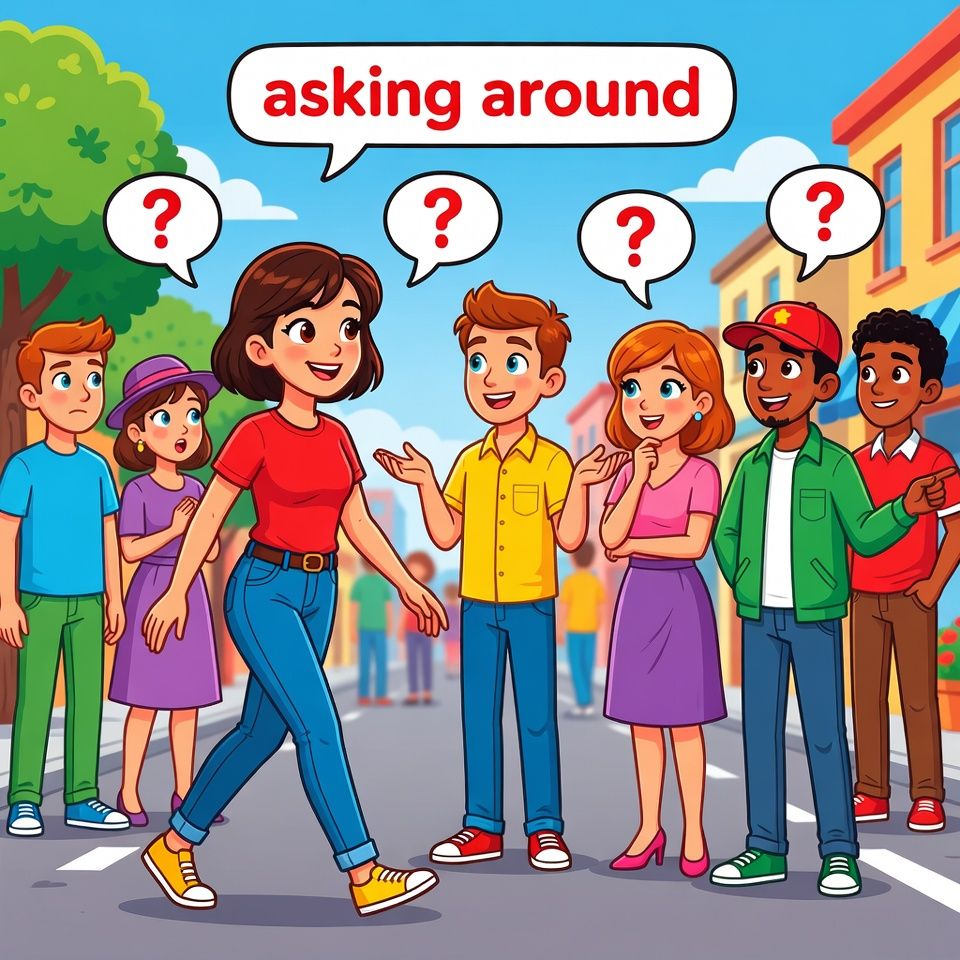
Cartoon representing the phrasal verb asking around

Definition

Asking around is the act of making inquiries or seeking information from multiple people, sources, or locations, rather than just one specific person or place. It implies a broad, often informal, and somewhat persistent effort to gather details, get opinions, find recommendations, locate a person or item, or understand a situation by consulting various individuals who might possess relevant knowledge or connections. This phrasal verb is typically used when the initial source of information is unknown or when a more comprehensive perspective is desired, leveraging a network or general public inquiry to piece together the necessary data. It's a common strategy for problem-solving, gathering advice, or finding something specific when direct information is not immediately available.

Examples

No.

Examples

1I've been asking around to see if anyone knows a reliable electrician in the area.
2She spent the entire morning asking around the office about the new project manager's reputation.
3If you're looking for a good restaurant, try asking around the hotel lobby; they usually have local insights.
4The police have been asking around the neighborhood, hoping someone witnessed the incident.
5Before making a big purchase, it's always smart to start asking around for reviews and recommendations.
6He was asking around for directions to the nearest bus stop, clearly lost.
7We need to begin asking around among our contacts to find a suitable candidate for the vacant position.
8My friend suggested asking around the local community center for volunteer opportunities.
9After asking around for days, I finally found someone who knew where to get that rare book.
10They are asking around at various agencies, trying to locate their missing pet.