Phrasal Verb - Petering out

· 2 min read

Raymundo CH

Image illustrating the verb Petering out

Image uploaded to Pixabay by DomyD

.

Definition

The phrasal verb 'peter out' means to gradually diminish, dwindle, or cease to exist. It describes a process where something, such as resources, energy, enthusiasm, an event, or a phenomenon, starts with a certain intensity or quantity but progressively weakens, reduces, or exhausts itself over time, eventually coming to an end. It implies a slow and steady decline rather than an abrupt stop, often leading to complete depletion or disappearance.

Examples

No.Example
1The storm, which had started with great fury, began to peter out by late morning.
2Their initial enthusiasm for the project slowly started to peter out as they encountered more obstacles.
3The mining operation had to close down when the gold vein finally petered out.
4His brilliant career seemed to peter out after a series of poor performances.
5We hoped the conversation wouldn't peter out, but finding new topics became challenging.
6The old well eventually petered out, forcing the villagers to find a new water source.
7Support for the protest movement began to peter out after several weeks without significant change.
8The supply of fresh water will peter out if we don't conserve it.
9Their savings account started to peter out after months of unemployment.
10The sound of the distant music gradually petered out as we drove further away.

Phrasal Verb - Pinpointing

· 2 min read
Raymundo CH

Image illustrating the verb Pinpointing

Image uploaded to Pixabay by Maiconfz

.

Definition

To pinpoint means to locate, identify, or describe something with extreme precision, accuracy, or exactness. It implies a detailed and often meticulous process of isolating a specific detail, cause, location, or moment from a broader context or a set of possibilities. This verb suggests a high degree of focus and analytical effort to determine the precise nature or position of something, leaving little room for ambiguity or error. It can apply to physical locations, abstract concepts like causes or feelings, specific moments in time, or crucial pieces of information.

Examples

No.Example
1Scientists are working to pinpoint the exact genes responsible for the disease.
2It was difficult for the detective to pinpoint the suspect's movements during the crucial hours.
3Can you pinpoint what exactly made you change your mind about the proposal?
4The engineers spent days trying to pinpoint the subtle flaw in the software code.
5Doctors struggled to pinpoint the precise cause of the patient's rare allergic reaction.
6Market researchers aim to pinpoint the specific demographic most likely to purchase their new product.
7I wish I could pinpoint the moment our relationship started to drift apart.
8The historian's research helped to pinpoint the exact date of the ancient battle.
9It's hard to pinpoint the source of that faint, intermittent noise in the engine.
10The detailed analysis allowed them to pinpoint areas for significant improvement in their operational efficiency.

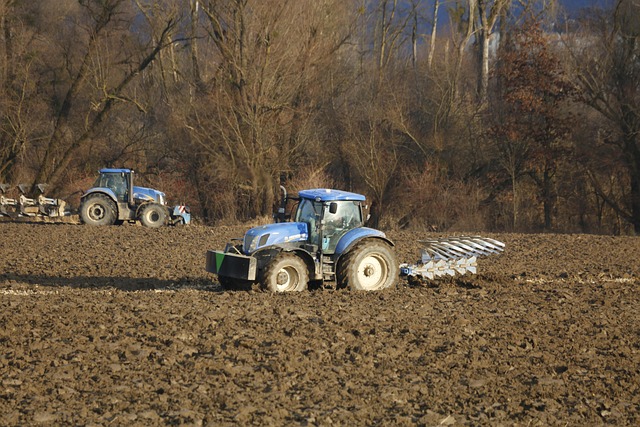
Phrasal Verb - Ploughing Ahead

· 2 min read
Raymundo CH

Image illustrating the verb Ploughing Ahead

Image uploaded to Pixabay by schauhi

.

Definition

To continue doing something that might be difficult or uncertain, often requiring a lot of effort or determination. This can involve overcoming obstacles, taking risks, and persevering in the face of challenges.

Examples

No.Example
1We need to plough ahead and complete the project by the end of the month.
2She's determined to plough ahead with her plans, even though the odds are against her.
3The company had to plough ahead and absorb the losses from the failed investment.
4The researchers had to plough ahead and collect more data in order to make a breakthrough.
5It's crucial to plough ahead and push through the tough times.
6She's not one to give up easily and will always plough ahead when faced with obstacles.
7The team had to plough ahead and meet the deadline, despite the challenges they faced.
8The government needs to plough ahead and implement the new policies, even if they're unpopular.
9We have to plough ahead and focus on finding a solution, rather than dwelling on the problems.
10The scientist had to plough ahead and take the next step, even if it meant venturing into unknown territory.

Phrasal Verb - Pointing Out

· 2 min read
Raymundo CH

Image illustrating the verb Pointing Out

Image uploaded to Pixabay by TheDigitalArtist

.

Definition

To explicitly indicate or make clear what something is, where it is, or what it involves, often by highlighting its presence, characteristics, or function.

Examples

No.Example
1She pointed out the visitor to the others in the room.
2The teacher asked the students to point out the map on the wall.
3The sign on the door pointed out the store's opening hours.
4The tourists pointed out the local delicacies on the menu.
5The map pointed out the location of the park.
6She pointed out the defects in the fabric.
7The address on the package pointed out the recipient's name.
8The instructions pointed out the steps to assemble the furniture.
9The official pointed out the rules of the game.
10The newspaper article pointed out the issues with the government policy.

Phrasal Verb - Praising up

· 2 min read
Raymundo CH

Image illustrating the verb Praising up

Image uploaded to Pixabay by AstralEmber

.

Definition

The phrasal verb 'praise up' denotes the act of commending, extolling, or expressing admiration for someone or something, often with a heightened degree of enthusiasm, frequency, or intensity. It implies a deliberate effort to elevate the subject's status, reputation, achievements, or perceived value. This commendation can range from genuine appreciation to a more strategic or even exaggerated form of flattery, aiming to make the subject appear superior, more accomplished, or highly commendable. The 'up' often adds an intensifying nuance, suggesting not merely praise, but praise that seeks to lift or elevate the subject in the estimation of others. It can be used in various contexts, such as a boss praising an employee, a critic praising a work of art, or an individual praising a friend's success.

Examples

No.Example
1The manager was constantly praising up his top sales executive in front of the entire team.
2She spent the whole dinner party praising up her husband's culinary skills to all their guests.
3Critics have been praising up the director's latest film as a groundbreaking cinematic achievement.
4It felt a bit disingenuous how he would always praise up the CEO in hopes of getting a promotion.
5My grandmother loves to praise up her grandchildren whenever we visit, no matter how small our achievements.
6The local newspaper was praising up the community's efforts to revitalize the downtown area.
7Don't just praise up your team when they win; acknowledge their hard work even when results are mixed.
8He couldn't stop praising up his new car, despite its minor mechanical issues.
9The minister was praising up the selfless contributions of the volunteers during the Sunday service.
10Even amidst challenges, they continued praising up the project's potential for future success.

Phrasal Verb - Pull in

· 2 min read
Raymundo CH

Image illustrating the verb Pull in

Image uploaded to Pixabay by utroja0

.

Definition

To pull in someone or something means to move them towards you, often with a force or energy, or to attract something, often interest, attention, or a resource. It can also mean to incorporate or include something, such as a new idea or a latest technology, into a system or process. In some cases, it can also imply that something is fixed in place, such as a pin or a peg.

Examples

No.Example
1She's pulling in her children from playtime to have dinner.
2The sales manager is working hard to pull in new customers.
3The team leader decided to pull in a professional to help with the project.
4The mechanic tried to pull in some gasoline to get the engine started.
5The company is trying to pull in the latest technology to improve efficiency.
6He's pulling in his old college friends to help him with his new business.
7The designer made sure to pull in enough fabric when cutting out the costume.
8The economy is pulling in tourists with its beautiful beaches.
9The teacher is trying to pull in her students' attention with an interesting story.
10The crash test dummies are pulled in for the safety tests.

Phrasal Verb - Setting Down

· 2 min read
Raymundo CH

Image illustrating the verb Setting Down

Image uploaded to Pixabay by OpenClipart-Vectors

.

Definition

To set down a person or animal means to lower them to the ground or a surface by laying them down, often gently. To set down something means to put it down on a surface, either temporarily or permanently.

Examples

No.Example
1Let's set the dog down for a while so it can rest.
2The flight attendant asked passengers to set their luggage down at the designated area.
3I set my bag down on the floor, exhausted from the long journey.
4The nurse carefully set the patient down on the examination table.
5After arriving at the campsite, we set our tents down on the grass.
6She set her purse down next to her chair, ready to enjoy the concert.
7Please set your belongings down in the storage room, we'll take care of them.
8The rest stop attendant asked people to set their weary feet down on the benches.
9To avoid overloading, please set the box down one by one.
10After setting the animal down, the owner made sure it was comfortable and drinkable.

Phrasal Verb - Break down

· 2 min read
Raymundo CH

Image illustrating the verb Break down

Image uploaded to Pixabay by wilhei

.

Definition

To cause a machine or system to fail or make it stop working, to make something, such as a system or a process, collapse or be overwhelmed, to cause a person to be unable to continue with something because they are too tired, ill, or troubled by something, to reduce something to a lower level or condition.

Examples

No.Example
1The car broke down on the highway.
2The electricity grid broke down due to a cyber attack.
3After a few months away, her mind started breaking down.
4The new employee was overwhelmed by the workload and started breaking down.
5The researcher hoped to break down the complex problem using various methods.
6Her body was breaking down from lack of rest and proper nutrition.
7The overload of data caused the software to break down.
8He broke down in tears when he heard the news.
9The engineer was tasked with breaking down the system into smaller components.
10After years of abuse, her self-esteem started breaking down.

Phrasal Verb - Looking out for

· 2 min read
Raymundo CH

Image illustrating the verb Looking out for

Image uploaded to Pixabay by InstagramFOTOGRAFIN

.

Definition

The phrasal verb 'look out for' is multifaceted, primarily meaning to be vigilant, attentive, or watchful concerning someone or something, often with the intention of protection, anticipation, or discovery. It can convey the act of actively searching for or expecting something to appear or happen, particularly something that might be a danger, an opportunity, or a specific item. Additionally, it can signify caring for or protecting someone's interests, ensuring their well-being, or advocating on their behalf. In essence, it implies a state of active awareness and readiness, either to perceive an external event or entity, or to provide care and support to another individual.

Examples

No.Example
1Always look out for pickpockets when you're in crowded tourist areas.
2Our team leader is excellent; she always looks out for her subordinates, ensuring they have the resources they need.
3When you're driving, remember to look out for cyclists, especially at intersections.
4I'm looking out for a good deal on a new laptop during the Black Friday sales.
5Can you look out for the mail carrier? I'm expecting an important package today.
6Environmentalists are constantly looking out for signs of pollution in the local river.
7As an older brother, he felt it was his responsibility to look out for his younger sister.
8The scout troop was taught to look out for edible berries and dangerous plants in the wilderness.
9We need to look out for any new government policies that might affect our industry.
10My neighbors always look out for each other, which creates a strong sense of community.

Phrasal Verb - Looking Over

· 2 min read
Raymundo CH

Image illustrating the verb Looking Over

Image uploaded to Pixabay by Enlightening_Images

.

Definition

To 'look over' means to inspect, examine, or review something, often quickly but carefully, with the intention of gaining a general understanding, checking for errors, or evaluating its contents. It implies a thorough but not necessarily exhaustive scrutiny, focusing on key details or the overall structure to ensure accuracy, completeness, or suitability. This phrasal verb can be applied to documents, physical objects, plans, or situations, and is frequently used when one is proofreading, preparing for an event, or seeking an opinion or assessment.

Examples

No.Example
1Could you please look over this report for any typos before I submit it?
2The architect will look over the blueprints one last time before construction begins.
3I need to look over my notes carefully before the final exam tomorrow morning.
4She quickly looked over the contract, focusing on the main terms and conditions.
5The mechanic promised to look over my car to diagnose the strange noise it's making.
6Before making a decision, he wanted to look over all the available options.
7We spent the afternoon looking over old photographs and reminiscing about our childhood.
8The editor's job is to look over manuscripts for clarity, grammar, and style.
9Can you look over my resume and give me your honest feedback?
10They asked us to look over the new company policy changes and provide our input.