Phrasal Verb - Flaring Up

· 2 min read

Raymundo CH

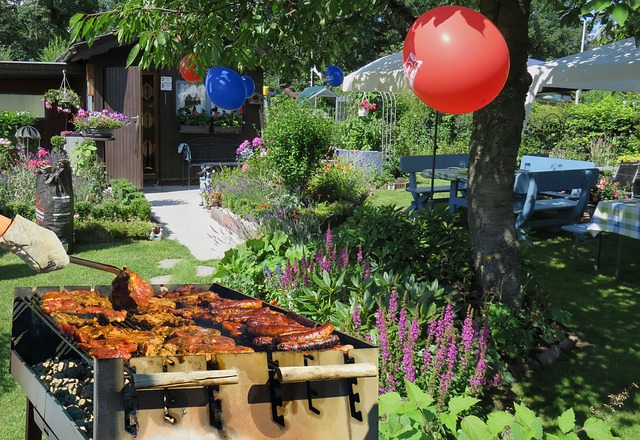
Image illustrating the verb Flaring Up

Image uploaded to Pixabay by geralt

.

Definition

To flare up means to suddenly erupt, become more intense, or become active again after a period of quiet, dormancy, or lesser intensity. This phrasal verb is commonly used in several contexts:

  1. For fires or flames: To suddenly burn more brightly, strongly, or intensely, often with a burst of light or heat. This can happen when fuel is added or conditions change.
  2. For illnesses, medical conditions, or symptoms: To suddenly become worse, more severe, or more painful after a period of improvement, remission, or stability. This suggests a relapse or exacerbation of a chronic condition.
  3. For emotions or conflicts: To suddenly become more intense, violent, or open; to erupt into an argument, dispute, or expression of strong feeling. This implies a sudden escalation from a state of calm or underlying tension.
  4. For a person: To suddenly become angry or upset.

The underlying sense across these uses is one of sudden, often unwelcome, intensification or resurgence.

Examples

No.Example
1The old injury started flaring up again after I went for a long run.
2Tensions between the two countries flared up following the border incident.
3When she heard the news, her temper flared up and she began to shout.
4We need to be careful with the campfire; a gust of wind could make it flare up.
5His eczema tends to flare up during the dry winter months.
6The debate flared up again when new evidence was presented.
7After years of peace, the old territorial dispute began to flare up once more.
8Adding more logs caused the small fire to flare up impressively.
9Her allergies always flare up when spring arrives with all the pollen.
10The coach worried that another disagreement would cause the team's internal conflicts to flare up.

Phrasal Verb - Fleshing Out

· 2 min read
Raymundo CH

Image illustrating the verb Fleshing Out

Image uploaded to Pixabay by garten-gg

.

Definition

To 'flesh out' means to add more details, information, substance, or development to an idea, plan, story, design, or concept that is currently in a preliminary, vague, or incomplete form. It implies a process of elaboration and expansion, transforming a basic outline or sketch into a more comprehensive, concrete, and understandable whole. This often involves providing specific examples, explanatory descriptions, supporting arguments, or additional layers of complexity that were missing in the initial conception, thereby giving it more depth, clarity, and viability. The aim is to make something richer, more substantial, and fully developed.

Examples

No.Example
1The author spent months researching historical documents to flesh out the minor characters in her novel.
2Before presenting the proposal to the board, we need to flesh out the budget and timeline considerably.
3Could you flesh out your initial concept for the marketing campaign? It's too abstract right now.
4The design team will meet next week to flesh out the user interface details for the new app.
5His initial pitch was good, but he needs to flesh out the specifics of how the project will be executed.
6We have a basic plot for the film, but we still need to flesh out the character arcs and subplots.
7The architect will flesh out the preliminary sketches with detailed blueprints and material specifications.
8During the workshop, participants were encouraged to flesh out their personal mission statements.
9The professor asked me to flesh out my essay with more supporting evidence and analysis.
10Let's use this meeting to flesh out the agenda for next month's conference.

Phrasal Verb - Flicking through

· 2 min read
Raymundo CH

Image illustrating the verb Flicking through

Image uploaded to Pixabay by NoName_13

.

Definition

To 'flick through' is a phrasal verb that describes the action of quickly turning the pages of a book, magazine, newspaper, or any other printed material without reading carefully or in detail. This action is typically done to get a general impression of the content, to locate a specific piece of information, an image, or a particular section, or simply to browse idly and pass the time. It implies a rapid, often superficial, examination rather than a thorough and sequential reading, characterized by the quick, light movement of turning pages one after another.

Examples

No.Example
1She spent the afternoon flicking through old photo albums, reminiscing about her childhood memories.
2Can you flick through the quarterly report and tell me if there's any mention of the new project's budget?
3While waiting for her appointment, Sarah began flicking through the magazines on the coffee table.
4Before deciding which novel to buy, I always like to flick through a few pages to get a feel for the writing style.
5The professor quickly flicked through his lecture notes, trying to locate the specific quote he wanted to share with the class.
6I don't have time to read the entire newspaper this morning, so I'll just flick through the headlines and main articles.
7He was flicking through a graphic novel, admiring the artwork more than reading the story word for word.
8Could you flick through these archived documents and pull out anything related to the 'Phoenix' initiative?
9The interior designer would often flick through various catalogues for inspiration before meeting with clients.
10My grandmother enjoys flicking through seed catalogs in the middle of winter, dreaming of her spring garden plans.

Phrasal Verb - Flocking Together

· 3 min read
Raymundo CH

Image illustrating the verb Flocking Together

Image uploaded to Pixabay by DaKub

.

Definition

To "flock together" is a phrasal verb primarily used metaphorically to describe the tendency of people with similar characteristics, interests, backgrounds, opinions, or goals to congregate, associate, or spend time with one another. It refers to the natural inclination for like-minded individuals to seek each other out and form groups or cliques. The idiom originates from the literal observation that birds of the same species or type tend to fly and gather in groups. When applied to humans, it implies that shared traits or perspectives create a natural affinity that leads to social cohesion among them. While often used to describe positive or neutral social grouping, it can sometimes carry a connotation of exclusivity, cliquishness, or even insularity, suggesting that certain groups prefer to stay within their own circles, sometimes to the exclusion of others.

Examples

No.Example
1At the large corporate event, all the new interns naturally started to flock together during the lunch break.
2It's a common observation that creative types tend to flock together at art exhibitions and gallery openings.
3Despite being from different departments, the employees who shared a passion for hiking always seemed to flock together on weekends.
4You'll often find that students with similar academic interests tend to flock together when choosing study partners.
5In a foreign country, it's common for expatriates from the same nation to flock together for support and a sense of familiarity.
6After the concert, fans of the band began to flock together outside the venue, hoping to catch a glimpse of the musicians.
7The old saying 'birds of a feather flock together' perfectly describes how individuals with shared hobbies often find each other.
8During political rallies, people with strong similar beliefs can be seen to flock together, reinforcing their collective identity.
9Even in a diverse community, certain age groups often tend to flock together at social gatherings and events.
10The film critics at the festival seemed to flock together, exchanging opinions and discussing the latest releases.

Phrasal Verb - Following Up

· 3 min read
Raymundo CH

Image illustrating the verb Following Up

Image uploaded to Pixabay by congerdesign

.

Definition

To 'follow up' is a versatile phrasal verb primarily meaning to take further action or continue an activity that has already begun, often with the aim of reinforcing a previous action, ensuring completeness, checking on progress, or maintaining contact. It implies a subsequent step taken to achieve a desired outcome or to gather more information after an initial interaction or event. This can involve re-contacting someone after a meeting, conversation, or initial communication to reiterate points, provide additional details, or check on a decision or outcome. It also encompasses pursuing a lead or opportunity, monitoring the status of a task, project, or request, or, in a medical or scientific context, observing a patient's condition after treatment or diagnosis to assess long-term effects. The core idea is to build upon or react to something that has already transpired to move it forward, confirm its status, or ensure its successful conclusion.

Examples

No.Example
1I need to follow up on that email I sent last week to ensure they received the proposal.
2The doctor asked me to follow up with him in a month to review the test results and discuss the treatment's effectiveness.
3After the job interview, it's considered good practice to follow up with a thank-you note to express your continued interest.
4We decided to follow up on the customer's complaint immediately to gather more details and resolve the issue promptly.
5Sales representatives often follow up with potential clients after an initial product demonstration to answer further questions and gauge their interest.
6Don't forget to follow up with the supplier about the delayed shipment; we need an updated estimated delivery date.
7She always follows up on her team members' tasks to make sure everything is progressing according to schedule and completed on time.
8The police had to follow up on several anonymous leads to gather sufficient evidence and ultimately catch the suspect.
9Our project team will follow up on all the action items assigned during today's meeting to ensure accountability.
10Following up regularly with professional contacts helps to strengthen relationships and keep communication lines open for future collaborations.

Phrasal Verb - Fooling Around

· 3 min read
Raymundo CH

Image illustrating the verb Fooling Around

Image uploaded to Pixabay by Alexas_Fotos

.

Definition

The phrasal verb "fool around" is highly versatile and carries several distinct meanings, often implying a lack of seriousness, responsibility, or focus, depending on the context:

  1. To behave in a silly, playful, or mischievous way: This is perhaps its most common and innocent usage, often describing lighthearted antics, horseplay, or generally not taking things seriously. It can apply to children at play or adults engaging in humorous or frivolous activities. Example: "The children were fooling around in the park, chasing each other and laughing."

  2. To waste time or procrastinate: In this context, it means to spend time idly, doing trivial or unproductive activities instead of focusing on tasks that require attention or effort. It implies a lack of discipline or an unwillingness to engage in serious work. Example: "Stop fooling around on your phone and finish your homework!"

  3. To play with something carelessly or experimentally: This meaning refers to handling an object without proper care, often in a risky or playful manner, or to trying out an idea, skill, or device without deep commitment or serious intent, often just for fun or to see what happens. Example: "Don't fool around with that sharp knife; you might cut yourself."

  4. To be unfaithful in a romantic relationship: This is a more serious, informal, and often negative connotation, meaning to engage in casual sexual encounters or flirtatious behavior outside of an established, committed relationship, implying infidelity or cheating. Example: "Her husband had been fooling around with someone else, which led to their divorce."

  5. To dabble or experiment without serious commitment: Similar to point 3, but often referring to hobbies, projects, or creative endeavors. It suggests trying something out for a short period without the intention of becoming an expert or making it a major part of one's life. *Example: "He spent a few months fooling around with pottery, but never really got serious about it."

Examples

No.Example
1The kids were fooling around in the classroom instead of listening to the teacher.
2Stop fooling around with those tools; you're going to break something valuable.
3If you keep fooling around, you'll never finish your project on time.
4She suspected her boyfriend was fooling around when he started coming home late.
5We were just fooling around with some old cameras, trying to see if they still worked.
6After a long day, sometimes all you want to do is fool around and relax.
7My boss warned me not to fool around on company time if I wanted to keep my job.
8The band started out just fooling around in a garage, never expecting to become famous.
9Don't fool around with dangerous chemicals without proper supervision.
10They spent the afternoon fooling around by the river, skipping stones and talking.

Phrasal Verb - Forking out

· 2 min read
Raymundo CH

Image illustrating the verb Forking out

Image uploaded to Pixabay by miosyn

.

Definition

To 'fork out' (or sometimes 'fork over') is an informal phrasal verb meaning to spend, pay, or hand over a significant sum of money, often unwillingly, reluctantly, or grudgingly. It implies a sense of reluctance or a substantial financial outlay that might be unavoidable, necessary, or simply perceived as a high cost. This phrase is frequently used when discussing expenses such as repairs, bills, taxes, or purchases that are particularly costly, and the payer might not be entirely happy about having to make the payment.

Examples

No.Example
1I had to fork out a fortune for car repairs after the accident.
2They're always forking out money for their kids' expensive hobbies.
3Nobody wants to fork out extra cash for hidden fees when booking a flight.
4We had to fork out thousands to get the roof fixed before winter.
5She reluctantly forked out a huge sum for the designer handbag she'd been eyeing.
6The company had to fork out a substantial amount in legal fees to settle the dispute.
7Are you really going to fork out for first-class tickets, considering the budget?
8Consumers are forking out more for groceries these days due to inflation.
9I hate having to fork out for dental work, but it's essential for my health.
10They refused to fork out any more money for the faulty product, demanding a refund instead.

Phrasal Verb - Fouling Up

· 2 min read
Raymundo CH

Image illustrating the verb Fouling Up

Image uploaded to Pixabay by planet_fox

.

Definition

To 'foul up' means to make a significant mistake, blunder, or error that causes a problem, ruins a plan, spoils a situation, or leads to a malfunction. It implies a degree of incompetence, carelessness, or an unfortunate turn of events that results in something going wrong, often with negative consequences. It can be used transitively (to foul something up) or intransitively (to foul up). When something is 'fouled up,' it is typically in a state of disarray, confusion, or malfunction due to human error, often making it difficult or impossible to proceed as intended.

Examples

No.Example
1He managed to foul up the entire presentation by forgetting to save the latest version.
2Don't foul up this time; the success of the whole project depends on you.
3The new intern unfortunately fouled up the client's order, sending them the wrong product.
4If we don't follow the instructions carefully, we're bound to foul up the assembly.
5The old machine kept fouling up, causing frequent delays in production and increasing maintenance costs.
6She was worried she would foul up her lines during the play's opening night and disappoint the director.
7Despite careful planning, a technical glitch fouled up the live broadcast just moments before airtime.
8They really fouled up the budget, spending way more than allocated and forcing cuts elsewhere.
9You always manage to foul things up when I ask you to help with anything technical.
10The government's handling of the crisis was severely criticized for fouling up initial response efforts.

Phrasal Verb - Freezing Up

· 3 min read
Raymundo CH

Image illustrating the verb Freezing Up

Image uploaded to Pixabay by Pezibear

.

Definition

To 'freeze up' is a phrasal verb with two primary meanings. Firstly, it means to suddenly become unable to move, think, speak, or act, typically due to extreme nervousness, fear, shyness, or surprise. In this sense, a person's mental or physical faculties become temporarily paralyzed, preventing them from responding or performing as they normally would. This can manifest as a complete mental block during an exam, an inability to speak during a public presentation, or physical immobility in a shocking situation. Secondly, when referring to a machine or a system, particularly a computer, 'freeze up' means to stop functioning, become unresponsive to input (like mouse clicks or keyboard strokes), and effectively hang or lock. The system ceases to perform its operations and requires a restart or forced shutdown to resume normal function.

Examples

No.Example
1During her first big presentation, she started to freeze up and couldn't remember a single word of her script.
2My old laptop tends to freeze up when I try to run too many applications at once, forcing me to restart it.
3He completely froze up on the driving test when the instructor asked him to parallel park, failing him immediately.
4The software updated overnight and now my entire system keeps freezing up, which is incredibly frustrating.
5Despite all the practice, the actor still had a tendency to freeze up during live performances.
6When the interviewer asked a really difficult question, I could feel myself starting to freeze up, my mind going blank.
7The security camera system froze up last night, so we don't have any footage of the incident.
8In moments of high stress, some people freeze up, while others are able to think clearly and act.
9Don't let the pressure get to you and cause you to freeze up when it's your turn to bat.
10We had to force quit the program because it had frozen up and wasn't responding at all.

Phrasal Verb - Freshening Up

· 3 min read
Raymundo CH

Image illustrating the verb Freshening Up

Image uploaded to Pixabay by padrefilar

.

Definition

The phrasal verb "freshen up" primarily refers to the act of making oneself or something else cleaner, more pleasant, or more presentable, typically after a period of activity, travel, or stagnation. When applied to an individual, it generally involves light personal hygiene routines like washing one's face and hands, combing hair, changing into clean clothes, or reapplying light makeup to feel more invigorated and look tidier without necessarily taking a full bath or shower. It implies a quick, often superficial, cleansing or sprucing up. When used in reference to a place or an object, "freshen up" means to make it appear newer, cleaner, or more appealing by tidying, dusting, airing out, decluttering, or making minor decorative adjustments. Metaphorically, it can also signify revitalizing or improving something that has become stale, dull, or outdated, such as skills, knowledge, or an idea, by revisiting, updating, or practicing it. The overarching theme across all its uses is to restore a sense of newness, cleanliness, or vitality.

Examples

No.Example
1After the long flight, I really needed to freshen up before heading to the meeting.
2Could you please freshen up the guest room a bit? It smells a little musty.
3She always takes a few minutes to freshen up in the restroom before her presentation.
4Let's open the windows and freshen up the living room with some fresh air.
5I think I'll just quickly freshen up and then we can go out for dinner.
6The old paint job needs to be freshened up to make the house look more inviting.
7Before the party, he spent an hour freshening up his look.
8My computer skills need to be freshened up; I haven't used that software in years.
9A quick splash of water on my face always helps me to freshen up and feel more awake.
10The florist suggested adding some new greenery to freshen up the flower arrangement.