8 posts tagged with "Research"

View All Tags

Phrasal Verb - Pouring Over

· 2 min read

Raymundo CH

Image illustrating the verb Pouring Over

Image uploaded to Pixabay by minka2507

.

Definition

To study or examine something very closely and thoroughly, often in a detailed and meticulous way, typically in order to gain a deeper understanding or to analyze the information carefully.

Examples

No.Example
1The scientist spent hours pouring over the data to identify the cause of the error.
2The researcher poured over the research papers to ensure the accuracy of the results.
3The detective poured over the crime scene evidence to find any clues.
4The chef spent hours pouring over the recipe to perfect the dish.
5The project manager poured over the budget to identify areas for cost-cutting.
6The student poured over the textbook to prepare for the exam.
7The artist poured over the painting to add the final touches.
8The designer poured over the design concept to ensure it met the client's requirements.
9The engineer poured over the technical specifications to ensure the new machine met safety standards.
10The food critic poured over the menu to find the perfect dish to review.

Phrasal Verb - Reading Up On

· 2 min read
Raymundo CH

Image illustrating the verb Reading Up On

Image uploaded to Pixabay by geralt

.

Definition

To obtain detailed information about a particular topic or subject by researching and studying it thoroughly. This can be done by reading books, articles, or online resources.

Examples

No.Example
1I need to read up on biology for my exam next week.
2He read up on ancient civilizations before traveling to Europe.
3I'd recommend reading up on the latest marketing trends before starting a new campaign.
4To prepare for the job interview, I read up on the company's history and mission statement.
5She read up on the symptoms of the disease before seeing the doctor.
6The new employee was asked to read up on the company's policies and procedures.
7Reading up on a new hobby can be a fun and educational experience.
8If you're planning a trip to a foreign country, it's a good idea to read up on the culture and customs.
9To understand the complex issue, it's necessary to read up on the subject in depth.
10The research team read up on the latest studies in their field before presenting their findings.

Phrasal Verb - Carrying out

· 2 min read
Raymundo CH

Image illustrating the verb Carrying out

Image uploaded to Pixabay by MrsBrown

.

Definition

To 'carry out' means to perform, execute, or implement a task, plan, instruction, experiment, duty, or investigation to its completion. It implies putting something into action or effect, often involving a series of steps or a structured process. This phrasal verb emphasizes the act of performance and the successful completion of an assigned or undertaken responsibility, rather than just the planning or conceptualization. It suggests adherence to a specific method or instruction to achieve a desired outcome, often in a formal or organized context. It can also refer to fulfilling a promise or threat.

Examples

No.Example
1The team was instructed to carry out the mission without fail, regardless of the obstacles.
2Scientists are working diligently to carry out a new study on the long-term effects of pollution.
3She needs to carry out the instructions precisely for the complex scientific experiment to yield accurate results.
4It's important to carry out regular maintenance on your car to prevent major breakdowns and ensure safety.
5The police will carry out a thorough investigation into the recent bank robbery, interviewing all witnesses.
6Students were asked to carry out a survey among their peers to gather data for their sociology project.
7We must carry out our responsibilities as citizens, including voting and obeying the law, for a functional society.
8The company plans to carry out a major restructuring next quarter to improve efficiency and reduce costs.
9He promised to carry out his threat if his demands weren't met, leaving everyone concerned.
10Before leaving the facility, please carry out a final check of all security systems to ensure everything is locked.

Phrasal Verb - Delving Into

· 2 min read
Raymundo CH

Image illustrating the verb Delving Into

Image uploaded to Pixabay by STA82

.

Definition

To delve into something means to explore it thoroughly, often in a detailed or investigative manner. It involves examining or investigating something closely, frequently in order to gain a better understanding or insight. The term can also convey a sense of depth or intensity in which one gets involved.

Examples

No.Example
1She decided to delve into the world of photography after seeing a beautiful landscape shot.
2He spent years delving into the history of the company, trying to understand how it evolved.
3The detective had to delve into the case from every angle, considering multiple theories.
4To improve his script, he needed to delve into the characters' backstories.
5The team had to delve into the data to find a solution to the problem.
6She delved into the world of fiction writing, and published her first novel a year later.
7He delved into the world of cryptocurrency and became an expert.
8The investigation required them to delve into the dark web to find clues.
9To help her understand the issue, the teacher asked her to delve into the research.
10The anthropologist delved into the different cultures, studying their customs and traditions.

Phrasal Verb - Digging into

· 2 min read
Raymundo CH

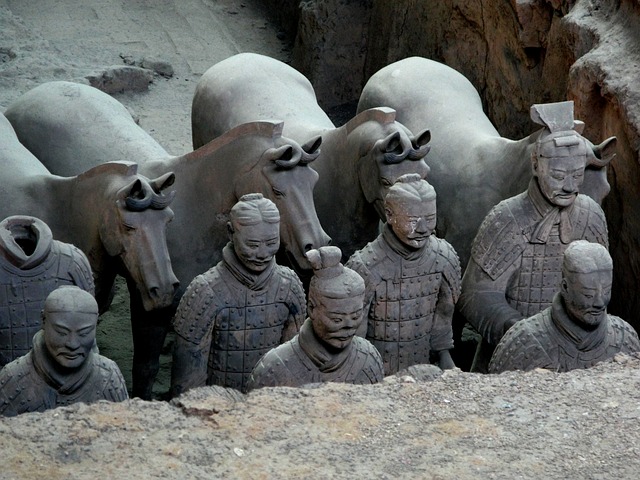
Image illustrating the verb Digging into

Image uploaded to Pixabay by ChiemSeherin

.

Definition

To thoroughly investigate or research a subject, issue, or problem. It involves examining every detail, analyzing evidence, and sometimes exposing hidden or obscured information. Digging into something typically requires a lot of time, effort, and sometimes expertise. It can also involve debunking myths, correcting misconceptions, or clarifying ambiguous information.

Examples

No.Example
1The journalist dug into the company's financial records to expose a cover-up.
2The detective dug into the evidence to solve the cold case.
3The team dug into the sales data to find the reason for the decline.
4The auditor dug into the company's tax returns to identify discrepancies.
5The researcher dug into the historical records to understand the impact of a major event.
6The fan dug into the actor's backstory to understand his character's motivations.
7The cybersecurity expert dug into the threat to pinpoint the source of the attack.
8The spy dug into the government's files to uncover a hidden alliance.
9The journalist dug into the politician's campaign donations to reveal a connection to a scandal.
10The anthropologist dug into the culture's traditions to understand their significance.

Phrasal Verb - Dig Up

· 2 min read
Raymundo CH

Image illustrating the verb Dig Up

Image uploaded to Pixabay by pixa1958

.

Definition

To find and bring to the surface something buried, hidden, or difficult to access; to uncover or discover something that is obscure or not well-known.

Examples

No.Example
1The archaeologists will dig up the ancient artifacts to study them more closely.
2The detective dug up new evidence that helped crack the case.
3After digging up the garden, we can replant it with new flowers.
4The researchers will dig up information from old archives to write the history book.
5The reservoir will be dug up to create a new water park.
6The dog dug up the bone it had buried in the backyard.
7The husband dug up old family records to learn more about his ancestors.
8The parents dug up the child's forgotten toys while cleaning the room.
9The crop duster aircraft will dig up the weeds in the field to help prevent the growth of weeds.
10The museum will dig up artifacts from the ancient civilization to create an exhibit.

Phrasal Verb - discovering

· 2 min read
Raymundo CH

Image illustrating the verb discovering

Image uploaded to Pixabay by manolofranco

.

Definition

To find out about something new or unknown, often through one's own efforts or experiences. This phrasal verb can also mean to make something known to others. It implies gaining knowledge or information that was previously unavailable.

Examples

No.Example
1I knew of a shortcut that could save us an hour on our commute.
2The archaeologists discovered a new civilization in the jungle.
3She knew of a great restaurant in the area that we should try.
4The detective knew of a suspect who fit the description.
5My friend knew of a job opening that matched my skills.
6The scientist made a groundbreaking discovery that could change the course of history.
7The teacher knew of a teaching method that had proven successful.
8The company knew of a potential competitor that was emerging.
9The explorers knew of a hidden valley that had never been seen before.
10The inventor knew of a new technology that could revolutionize the industry.

Phrasal Verb - Looking into

· 2 min read
Raymundo CH

Image illustrating the verb Looking into

Image uploaded to Pixabay by tanmun

.

Definition

This phrasal verb means to examine or investigate a situation or problem in detail. It implies that new information or insights will be gained by delving deeper into the matter.

Examples

No.Example
1The detective spent hours looking into the case, leaving no stone unturned.
2The company is looking into the cause of the recent data breach.
3My parents are looking into sending me to a private school.
4I'd like to look into joining a local volunteer organization.
5The finance committee is looking into potential budget cuts.
6The HR department is looking into reports of harassment in the workplace.
7The doctor is looking into the possibility of a rare condition.
8The mayor is looking into ways to reduce traffic congestion.
9The investigative journalist is looking into allegations of corruption.
10The team is looking into the root cause of the equipment failure.