Phrasal Verb - Carrying out

· 2 min read

Raymundo CH

Image illustrating the verb Carrying out

Image uploaded to Pixabay by MrsBrown

.

Definition

To 'carry out' means to perform, execute, or implement a task, plan, instruction, experiment, duty, or investigation to its completion. It implies putting something into action or effect, often involving a series of steps or a structured process. This phrasal verb emphasizes the act of performance and the successful completion of an assigned or undertaken responsibility, rather than just the planning or conceptualization. It suggests adherence to a specific method or instruction to achieve a desired outcome, often in a formal or organized context. It can also refer to fulfilling a promise or threat.

Examples

No.Example
1The team was instructed to carry out the mission without fail, regardless of the obstacles.
2Scientists are working diligently to carry out a new study on the long-term effects of pollution.
3She needs to carry out the instructions precisely for the complex scientific experiment to yield accurate results.
4It's important to carry out regular maintenance on your car to prevent major breakdowns and ensure safety.
5The police will carry out a thorough investigation into the recent bank robbery, interviewing all witnesses.
6Students were asked to carry out a survey among their peers to gather data for their sociology project.
7We must carry out our responsibilities as citizens, including voting and obeying the law, for a functional society.
8The company plans to carry out a major restructuring next quarter to improve efficiency and reduce costs.
9He promised to carry out his threat if his demands weren't met, leaving everyone concerned.
10Before leaving the facility, please carry out a final check of all security systems to ensure everything is locked.

Phrasal Verb - Carrying Over

· 2 min read
Raymundo CH

Image illustrating the verb Carrying Over

Image uploaded to Pixabay by Peggy_Marco

.

Definition

To 'carry over' means to transfer or extend something from one period, context, or stage to a subsequent one. This can refer to financial balances (like an unused budget or a deficit), tasks or responsibilities that were not completed in one timeframe and must be addressed in the next, or qualities, effects, or influences from a past situation that continue to manifest or be relevant in a new one. It often implies a continuation, a postponed action, or the enduring impact of a previous state, ensuring that an item, value, or characteristic is not lost but rather brought forward into a new operational or temporal segment.

Examples

No.Example
1Any unused vacation days will carry over to the next year, up to a maximum of five days.
2The remaining budget surplus will carry over to the next fiscal quarter to fund the new initiative.
3Her excellent problem-solving skills developed in her previous role will undoubtedly carry over to her new management position.
4We need to ensure that the uncompleted tasks from phase one do not carry over and delay phase two of the project.
5The penalty points from the last game will carry over to the next match, affecting their starting position.
6Students can carry over a certain number of academic credits from community college to a four-year university.
7The emotional stress from his demanding job tends to carry over into his personal life, making relaxation difficult.
8Make sure to save the template so that all the custom settings carry over to your next document.
9Many cultural traditions from ancient civilizations continue to carry over into modern societal practices.
10The discussions from today's meeting about the new policy will carry over to next week's session for a final decision.

Phrasal Verb - Carrying Through

· 2 min read
Raymundo CH

Image illustrating the verb Carrying Through

Image uploaded to Pixabay by NoName_13

.

Definition

To carry through means to complete a plan, project, task, or commitment successfully, often despite encountering difficulties, obstacles, or opposition. It signifies the act of persevering with an intention or a started action until its conclusion, ensuring that all necessary steps are taken and the desired outcome is achieved. This phrasal verb implies a strong sense of determination, follow-through, and responsibility, transforming an initial idea, promise, or endeavor into a fully realized accomplishment. It emphasizes seeing something to its very end, rather than abandoning it midway, highlighting the execution and successful realization of a goal or obligation.

Examples

No.Example
1Despite numerous financial setbacks, the startup managed to carry through with their ambitious product launch.
2The manager expected every team member to carry through their assigned tasks with diligence and punctuality.
3She always makes sure to carry through on her promises, which makes her a very reliable friend.
4It takes incredible resolve to carry through a complex research project over several years.
5The government needs to carry through its proposed reforms to improve public services.
6He found it challenging to carry through his new exercise regimen past the first month.
7The architect was determined to carry through her unique vision for the building, despite some initial resistance.
8If we don't carry through with this marketing strategy, we risk losing our market share.
9Having committed to the marathon, she felt a strong urge to carry through and cross the finish line.
10Our success depends on our ability to carry through these strategic initiatives to their full potential.

Phrasal Verb - Catching up with

· 3 min read
Raymundo CH

Image illustrating the verb Catching up with

Image uploaded to Pixabay by nidan

.

Definition

The phrasal verb 'catch up with' is highly versatile and carries several distinct meanings depending on the context. Primarily, it means to reach the same level, point, or standard as someone or something else after having been behind or lagging. This can apply to tasks (e.g., work, studies, emails), physical progress (e.g., in a race or journey), or understanding and knowledge (e.g., news, trends, lessons). A very common usage refers to meeting or communicating with someone whom one has not seen or spoken to for a period of time, specifically to exchange news, update each other on recent events in their lives, and reconnect. In a more serious and often negative sense, 'catch up with' can signify that past actions, mistakes, or consequences eventually affect someone, implying that wrongdoing or neglect will ultimately be discovered or lead to suffering. Less frequently, it can also mean to find and confront someone, often to bring them to justice or to address a long-standing issue.

Examples

No.Example
1After missing a week of classes, I have a lot of notes to catch up with.
2I'm really looking forward to catching up with my old college friends this weekend.
3The new employee worked extra hours to catch up with the team's project schedule.
4Don't worry about falling behind; you'll catch up with the latest developments soon enough.
5His reckless spending eventually caught up with him, leading to significant debt.
6Let's grab coffee next week; I'd love to catch up with you and hear all your news.
7The police are determined to catch up with the escaped convict and bring him to justice.
8It's hard to catch up with all the new technologies released every month.
9If we drive a little faster, we should catch up with them before they reach the city.
10She spent her Sunday morning just trying to catch up with all her unread emails.

Phrasal Verb - Catching Up

· 2 min read
Raymundo CH

Image illustrating the verb Catching Up

Image uploaded to Pixabay by nidan

.

Definition

To catch up means to come up to or reach the same level or standard as someone or something, especially after a period of being behind. It can also refer to acquiring or learning about something that has happened or been developed during a period of time when one was not present or aware. This phrasal verb emphasizes the act of catching up or being contemporary with something. It is often used in both formal and informal contexts to express the idea of closing the gap or getting up to speed.

Examples

No.Example
1I tried to catch up with my friends during the break, but they had already gone home.
2The new employee had to catch up on the work she had missed in the previous week.
3My wife had to catch up on her sleep after taking care of our newborn baby all night.
4The hikers had to catch up with the group before nightfall.
5I have a lot of catching up to do on my reading list this month.
6The students had to catch up on the assignments they had missed during the strike.
7She's been feeling tired all day and needs to catch up on some rest.
8I need to catch up on my correspondence and respond to all the emails.
9The sales team has to catch up with the targets for the quarter.
10The doctors had to catch up with the latest medical research to stay current in their field.

Phrasal Verb - Chasing Up

· 2 min read
Raymundo CH

Image illustrating the verb Chasing Up

Image uploaded to Pixabay by Mohamed_hassan

.

Definition

To 'chase up' is a phrasal verb that means to actively investigate the progress or status of something, especially a task, request, payment, or information that is overdue, delayed, or incomplete. It involves contacting an individual, department, or organization to obtain an update, remind them of a pending action, or prompt them to take necessary steps to resolve an outstanding issue. Essentially, it is a proactive follow-up action aimed at ensuring that something is completed, information is provided, or a problem is addressed. It can also imply an effort to locate something or someone that is missing or has been unresponsive, often with the goal of securing a resolution or obtaining required details.

Examples

No.Example
1I need to chase up that report from John; it was due last Friday.
2Could you please chase up the IT department about our slow internet connection?
3The client hasn't paid their invoice yet, so I'll have to chase them up tomorrow.
4We're still waiting for the contract amendments; someone needs to chase them up with legal.
5Don't forget to chase up the supplier regarding the delivery date of the new equipment.
6She spent the entire morning chasing up various departments to get approval for her project.
7The manager asked me to chase up the outstanding tasks from the last team meeting.
8I've sent three emails, but I'll have to call them directly to chase up my refund.
9He's very good at chasing up leads and converting them into sales.
10The doctor's office said they'd chase up my referral with the specialist.

Phrasal Verb - checking in

· 2 min read
Raymundo CH

Image illustrating the verb checking in

Image uploaded to Pixabay by JESHOOTS-com

.

Definition

To greet or acknowledge someone's presence, especially when arriving at a place, usually after a period of absence; To answer someone's question or address someone's query, often as a way of providing additional information.

Examples

No.Example
1I checked in with my friends on social media.
2The traveler had to check in with the border control officer before entering the country.
3She checked in with the doctor to discuss her treatment plan.
4The reporter checked in with the government officials for a statement on the recent event.
5I checked in with my parents when I arrived at the airport.
6He checked in with his colleagues to discuss the project's progress.
7The airlines asked passengers to check in by 6pm to prepare for departure.
8She checked in with her friends at the hotel reception before heading out to explore the city.
9He checked in with the IT department to resolve the technical issues with his computer.
10The researcher checked in with her colleagues at the conference to discuss their findings.

Phrasal Verb - Checking Out

· 2 min read
Raymundo CH

Image illustrating the verb Checking Out

Image uploaded to Pixabay by TheDigitalArtist

.

Definition

To move items from a store or other place of business, to relocate items from a location to another location. When used as a phrasal verb, it can also mean to investigate something or call on someone's services.

Examples

No.Example
1She decided to check out the new Italian restaurant down the street.
2Before buying, he wanted to check out the reviews.
3While on vacation, they liked to check out local stores for unique souvenirs.
4Their company likes to check out potential employees before making a decision.
5The team decided to check out the competition before the big tournament.
6Be sure to check out the new exhibit at the art museum.
7The realtor advised her clients to check out the neighborhood before buying a house.
8You should check out the latest gadget at the technology store.
9The researcher decided to check out different methodologies before beginning the study.
10Do you have time to check out this new app before we move forward with the project?

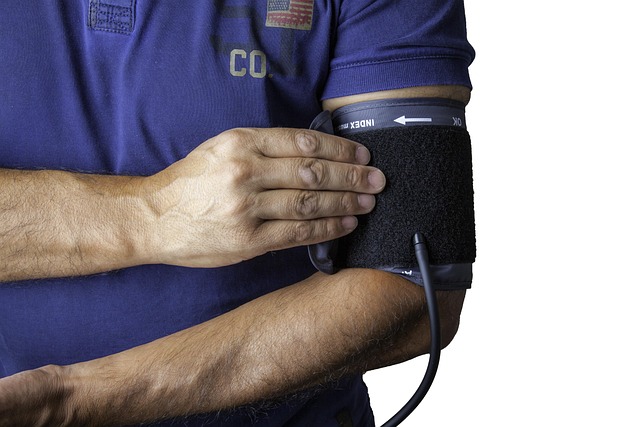
Phrasal Verb - Checking up on

· 2 min read
Raymundo CH

Image illustrating the verb Checking up on

Image uploaded to Pixabay by geraldoswald62

.

Definition

To 'check up on' someone or something means to investigate, monitor, or verify their status, progress, well-being, or the truthfulness of information. It often implies a sense of oversight or concern, either to ensure that everything is in order, that a person is healthy or behaving appropriately, or that a task is being completed as expected. This phrasal verb can be used in various contexts, from a doctor monitoring a patient's recovery, a manager overseeing an employee's work, a parent ensuring a child is safe, or a journalist verifying a source's claims. It typically involves making inquiries, observing, or examining to gain current and accurate information, often with the intention of providing support, correction, or assessment.

Examples

No.Example
1The doctor called to check up on her patient's recovery after the surgery.
2My manager frequently checks up on our team's progress to ensure we're on schedule.
3Parents often check up on their children to make sure they are doing their homework.
4I need to check up on the flight status before we leave for the airport, just in case of delays.
5The teacher decided to check up on the student who had been absent for a week to offer support.
6He asked his assistant to check up on the new supplier's references before signing the contract.
7Don't forget to check up on your elderly neighbor; she hasn't been feeling well lately.
8The police will check up on the suspect's alibi to verify its accuracy.
9It's good practice to check up on your car's oil and tire pressure regularly for safety.
10She keeps checking up on her investment portfolio to see how it's performing in the market.

Phrasal Verb - Cheering Up

· 2 min read
Raymundo CH

Image illustrating the verb Cheering Up

Image uploaded to Pixabay by Kranich17

.

Definition

The phrasal verb 'cheer up' is a common idiom expressing the idea of improving one's mood, often in response to a setback or a period of unhappiness. It can be used to encourage someone who is feeling down or sad, suggesting that their situation will get better. This phrasal verb is often used interchangeably with 'brighten up' and 'pick up'. The verb 'cheer' implies the idea of loud, enthusiastic noise, often associated with celebrations or exciting events. When combined with 'up', it shifts the meaning to becoming less sad or gloomy, which is the central idea behind the phrasal verb 'cheer up'.

Examples

No.Example
1You've been feeling down lately, cheer up, things will get better soon.
2I want to cheer you up after what happened yesterday.
3My best friend is going through a tough time, I'm trying to cheer her up.
4Cheer up, it's not the end of the world.
5The new puppy had a huge impact on Sarah and helped to cheer her up after the breakup.
6That cheered me right up to learn that I got the job.
7Cheer up, the sun will come out again soon.
8My grandma likes to play games with her friends to cheer her up after some surgeries.
9Reading about all the amazing things she accomplished cheered me up a lot.
10The song on the radio was so catchy and it helped to instantly cheer us all up.