Phrasal Verb - Come Through

· 2 min read

Raymundo CH

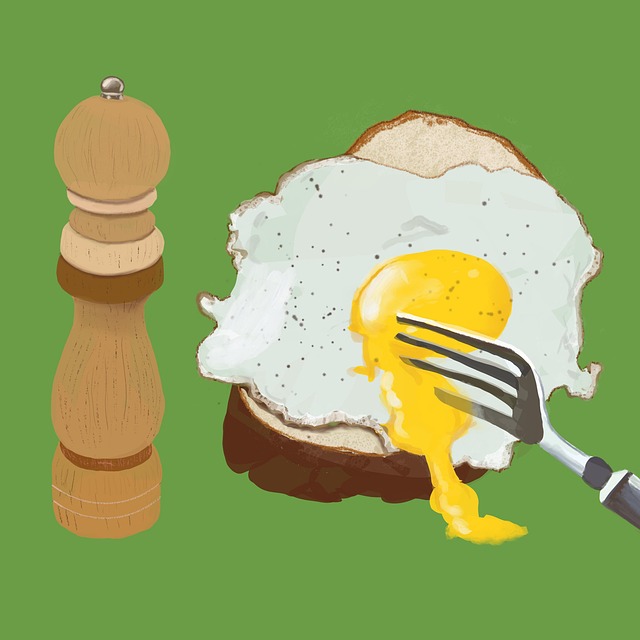
Image illustrating the verb Come Through

Image uploaded to Pixabay by NoName_13

.

Definition

To fulfill or implement a plan, decision, or self-imposed commitment, often in a timely manner.

Examples

No.Example
1After years of planning, the charity finally came through with the funds to build a new hospital.
2I was struggling to finish my project on time, but my team came through with their help.
3The company vowed to reduce their carbon footprint and promised to come through on their commitment.
4She had been training for months, and now it was time to come through with a record-breaking performance.
5He had promised to be there for his sister's birthday, and he surprised her by coming through with a gift.
6The new policy aimed to address the issue, and the government came through with a comprehensive plan.
7Despite the initial setbacks, the team managed to come through and achieved their goal.
8The weather forecast looked gloomy, but the movie came through with a spectacular visual effects.
9It took some time, but the software update finally came through with the bug fixes we needed.
10After a long wait, the singer came through with a new album that exceeded everyone's expectations.

Phrasal Verb - come up with

· 2 min read
Raymundo CH

Image illustrating the verb come up with

Image uploaded to Pixabay by laintsboudengue

.

Definition

To think of or create a new idea, concept, or solution, often in a spontaneous or imaginative way. It can also mean to rely on something or someone, or to examine something closely.

Examples

No.Example
1I'm going to come up with a plan to solve this problem.
2Can you come up with a creative title for this article?
3The team came up with a groundbreaking idea that changed the industry.
4I'm counting on you to come up with a solution to this crisis.
5Let's come up close and examine the painting to appreciate its details.
6After thinking for a while, she came up with a surprising explanation.
7Do your best to come up with a strategy for winning the game.
8The writers on the show came up with a new plot twist that left viewers stunned.
9Don't rely on just one plan, come up with a few alternatives just in case.
10She came up with a persuasive argument that convinced the panel to support her proposal.

Phrasal Verb - Coming up

· 3 min read
Raymundo CH

Image illustrating the verb Coming up

Image uploaded to Pixabay by laintsboudengue

.

Definition

The phrasal verb "come up" is highly versatile, carrying multiple distinct meanings depending on the context in which it is used:

  1. To arise, be mentioned, or present itself: This is perhaps one of its most common uses, referring to a topic, issue, problem, question, or point that emerges, is brought into discussion, or becomes apparent and requires attention. It signifies something becoming noticeable or requiring action.

    • Example: "A new challenge came up during the project review."
  2. To approach someone or something: In this sense, it means to move closer to a person, object, or place, often with the intention of interacting, examining, or reaching it.

    • Example: "She came up to the counter to place her order."
  3. To appear, be produced, or grow: This meaning often relates to things becoming visible or manifesting. It can describe plants emerging from the ground, numbers appearing in a lottery, results showing on a screen after a search, or even a sudden occurrence.

    • Example: "The first spring flowers are starting to come up in the garden."
  4. To happen soon; to be imminent: Used to indicate that an event, deadline, date, or occasion is approaching in the near future.

    • Example: "My birthday is coming up next week."
  5. To travel north or to a more important/central place: This usage describes movement from a location perceived as less significant (often south or rural) to one considered more central, important, or northern (like a capital city or a major urban center).

    • Example: "He came up to London for the conference."
  6. To reach a certain level or standard: To ascend to a particular position, height, rank, or quality.

    • Example: "The water level in the river came up significantly after the heavy rain."

Essentially, "come up" generally implies something emerging, approaching, or becoming evident, often carrying an element of newness, discovery, or immediacy.

Examples

No.Example
1A surprising number came up in the lottery draw last night.
2The topic of flexible working hours came up during our team discussion.
3She came up to the stage to accept her well-deserved award.
4The young shoots are already starting to come up through the soil.
5My sister's wedding is coming up next month, and I'm very excited.
6If any unexpected issues come up, we'll need to address them immediately.
7He came up from the countryside to study at the city university.
8Many interesting historical facts came up when I searched the online archives.
9The water level in the swimming pool came up by a few inches after we filled it.
10I hope nothing urgent comes up that would prevent us from going on holiday.

Phrasal Verb - Cook Up

· 2 min read
Raymundo CH

Image illustrating the verb Cook Up

Image uploaded to Pixabay by congerdesign

.

Definition

To plan, organize, and prepare (an idea, a story, a scheme) in a secretive or deceitful manner. Sometimes, it can also refer to the act of falsifying or creating information.

Examples

No.Example
1The detective suspected that the suspects were trying to cook up an alibi.
2The politicians were accused of cooking up a scandal to discredit their opponents.
3The inventor has a reputation for cooking up innovative ideas.
4The journalist uncovered a plot to cook up a fake news story.
5The company was accused of cooking up a financial crisis to avoid paying taxes.
6The scientists had to cook up a new theory to explain the experimental results.
7The writer struggled to come up with a compelling story but eventually managed to cook one up.
8The police suspected that the crime scene had been altered to cook up a false lead.
9The conspirators were caught red-handed trying to cook up a plan to steal billions.
10The researcher cooked up a hypothesis based on incomplete data and later found it to be incorrect.

Phrasal Verb - Count In

· 2 min read
Raymundo CH

Image illustrating the verb Count In

Image uploaded to Pixabay by F1Digitals

.

Definition

To count in is a phrasal verb that means to join a group or a team by keeping pace with others, often in a rhythm or pattern. It can also refer to entering a place or a situation, and being counted as part of a group.

Examples

No.Example
1The new employee was counted in when the team began their chant.
2The rhythmic music made everyone want to count in and dance.
3As we entered the party, the hostess counted us in with a warm smile.
4The new member was counted in for the team's purposes and began working immediately.
5The crowd counted me in as one of their own, inviting me to join the celebration.
6The teacher counted the students in when she took attendance.
7The musician practiced counting in so she could match her accompanist.
8The entire room counted in when the toast was given.
9The received votes had to be counted in to determine the outcome.
10As the performance began on cue, all the players counted in with swift precision.

Phrasal Verb - Count On

· 2 min read
Raymundo CH

Image illustrating the verb Count On

Image uploaded to Pixabay by PIRO4D

.

Definition

To expect or depend on someone or something to happen, exist, or be available in a particular way, often because it is usually true or reliable. This can also refer to adding a specific number to an amount. It can also mean to plan for or make provision of something.

Examples

No.Example
1I'm counting on you to help me move tomorrow.
2The team is counting on their star player to win the game.
3Can you count on me to get the task done on time?
4The company is counting on the new policy to increase sales.
5I'm counting on the taxi to be at the airport on time.
6She's counting on her scholarships to cover her college fees.
7The project is counting on some outside funding.
8He's counting on the weather to be good for the outdoor event.
9They are counting on the new software to improve their business operations.
10The team is counting on the coach to lead them to victory.

Phrasal Verb - Counting Out

· 2 min read
Raymundo CH

Image illustrating the verb Counting Out

Image uploaded to Pixabay by pendleburyannette

.

Definition

To remove or eliminate a person or thing from a group, often by sending them away or excluding them.

Examples

No.Example
1The teacher counted out the student who was making noise in class.
2The team tried to count out the opposing player, but they managed to score a goal.
3The manager counted out the employee who had been late to work for the fifth time.
4The doctor had to count out the patient who was allergic to certain medications.
5The referee counted out the player who had been fouled three times in a row.
6The politician counted out his rival's campaign, criticizing their policies.
7The police officer counted out the person who was trying to leave the crime scene.
8The coach counted out the player who was not following the team's strategy.
9The music teacher counted out the student who was making too much noise on the instrument.
10The manager counted out the employee who had been consistently meeting their sales targets.

Phrasal Verb - Cramming

· 2 min read
Raymundo CH

Image illustrating the verb Cramming

Image uploaded to Pixabay by ggim5

.

Definition

To cram is a phrasal verb that means to pack or fill something tightly and closely, often with too much stuff or information. It can also imply that something is being learned or done quickly or hastily, often with a sense of urgency or panic. The verb can be used in various contexts, including describing how people prepare for exams or tests, or how they pack luggage for a trip.

Examples

No.Example
1She was cramming all night for her exam.
2The luggage compartment is going to cram a bit tightly with all the kid's toys.
3This book really helps in cramming math formulas quickly.
4Stop cramming all those dirty clothes in here!
5Students are busy cramming last-minute notes before the exam.
6Try not to cram all the food on your plate, there is plenty of space.
7This course is designed to help you cram and remember the most critical topics.
8Crumpled up papers began to cram in her messy desk drawer.
9The old meat freezer at the butchers began to cram with leftovers.
10Luggage began to cram in the dimly lit dim luggage storage room

Phrasal Verb - Cropping Up

· 2 min read
Raymundo CH

Image illustrating the verb Cropping Up

Image uploaded to Pixabay by klaber

.

Definition

To crop up in this context means to happen or appear unexpectedly, often in a sudden and surprising manner. It can also mean to become suddenly known or popular. The term can be used interchangeably with 'pop up' or 'show up', but it tends to have a more casual and conversational tone.

Examples

No.Example
1I hadn't thought about it, but the idea of starting my own business has been cropping up in my head for years.
2The news of the celebrity's affair cropped up in the tabloids last week.
3As we were walking through the park, we heard the sound of kids cropping up and playing loudly.
4When I mentioned the company's new product, the discussion instantly started cropping up on social media.
5She hadn't expected to run into her old friend at the party, but they started cropping up in conversation as soon as they saw each other.
6The rumors of the movie's sequel had been cropping up online for months before it was officially announced.
7At first, we thought it was just a one-off comment, but the controversy started cropping up all over the internet.
8As the season progressed, the show started cropping up more and more in people's conversations.
9Despite being hesitant at first, the new restaurant's popularity started cropping up all over town.
10The stylish design of the house cropped up as the focus of many architectural magazines last year.

Phrasal Verb - Crossing Out

· 2 min read
Raymundo CH

Image illustrating the verb Crossing Out

Image uploaded to Pixabay by Tilixia-Summer

.

Definition

To intentionally or accidentally erase or strike through part or all of a written word or phrase, often to indicate rejection, deletion, or some other form of dismissal. Can also imply leaving nothing intact or in existence.

Examples

No.Example
1The teacher crossed out the student's answer because it was incorrect.
2She crossed out the items from the shopping list because they were no longer needed.
3He crossed out the name from the nominations list due to ineligibility.
4The actor crossed out her lines because she was not feeling well.
5The student crossed out the wrong answer on the multiple-choice test.
6The manager crossed out the project from the budget because it was deemed unnecessary.
7The artist crossed out part of the painting because it didn't fit her vision.
8The fighter crossed out his opponent's face with a flurry of punches.
9The hacker crossed out the virus from the system with the help of an antivirus software.
10The author crossed out the sentence from the novel due to a change in plot direction.