15 posts tagged with "Journalism"

View All Tags

Phrasal Verb - Lumping Together

· 2 min read

Raymundo CH

Image illustrating the verb Lumping Together

Image uploaded to Pixabay by Alexas_Fotos

.

Definition

To 'lump together' is a phrasal verb that means to group different people or things together, often indiscriminately, without proper consideration for their individual characteristics, differences, or nuances. It implies a tendency to generalize or oversimplify by treating distinct entities as if they were identical or belonged to the same undifferentiated category. This action can sometimes be inaccurate, unfair, or lead to misunderstandings, as it disregards the specific traits, contexts, or identities that differentiate one element from another within the grouped whole. It suggests a lack of careful distinction or a broad-brush approach to categorization.

Examples

No.Example
1It's unfair to lump all immigrants together as if they all share the same experiences and motivations.
2The report tends to lump all developing nations together, ignoring their unique economic challenges and cultural differences.
3You can't just lump all these symptoms together; we need to investigate each one individually for a proper diagnosis.
4Critics often lump all modern art together, failing to appreciate the distinct movements and artists within it.
5My manager has a habit of lumping project A and project B together, even though they have completely different timelines and objectives.
6The media frequently lumps various protest groups together, even when their agendas and tactics diverge significantly.
7Don't lump all your responsibilities together and try to tackle them at the last minute; it's better to prioritize.
8She felt it was a disservice to lump her detailed research in with the superficial findings of other students.
9He tends to lump anyone who expresses a different opinion into the same 'opposition' category, which is an oversimplification.
10The company made a mistake by lumping all its customer feedback together without segmenting it by product line.

Phrasal Verb - Passing Over

· 3 min read
Raymundo CH

Image illustrating the verb Passing Over

Image uploaded to Pixabay by suman

.

Definition

To 'pass over' primarily means to disregard, ignore, or omit someone or something, often in favor of another option. This can manifest in several ways:

  1. Exclusion from selection or promotion: This is a very common usage, implying that an individual or entity was deliberately not chosen for an opportunity, a position, or a reward, despite potentially being qualified, while others were selected. It often carries a connotation of unfairness or being overlooked.
  2. To skip or omit information: To deliberately or inadvertently leave out certain details, facts, or topics when discussing or presenting something.
  3. To ignore or overlook a fault or transgression: To choose not to address or punish someone for a mistake or minor offense, often out of leniency or a desire to move on.
  4. To go across or beyond something (less common/literal): While less frequent in its phrasal verb sense, it can literally mean to move from one side to another, or metaphorically to transcend a difficulty.

Examples

No.Example
1Despite his extensive experience, the company decided to pass over John for the promotion, opting for a younger candidate.
2The editor made a conscious decision to pass over the controversial chapter, believing it would detract from the main narrative.
3I can't believe they passed over my application without even granting an interview; I met all the qualifications.
4The referee chose to pass over the minor foul, allowing play to continue without interruption.
5During the Q&A session, the speaker seemed to pass over any questions regarding the company's recent financial troubles.
6Many talented artists were unfortunately passed over in favor of those with more commercial appeal during the awards nominations.
7It's frustrating when your contributions are consistently passed over, making you feel undervalued.
8The teacher decided to pass over the student's late submission, understanding the personal difficulties they were facing.
9When drafting the policy, they intentionally passed over several key details that might have complicated its approval.
10After weeks of waiting, she learned her proposal had been passed over in favor of a more conventional approach.

Phrasal Verb - Noting Down

· 2 min read
Raymundo CH

Image illustrating the verb Noting Down

Image uploaded to Pixabay by congerdesign

.

Definition

To write or record something, especially in order to remember or refer to it later. This phrasal verb is used to describe the action of jotting down a piece of information, a thought, or a detail. It can be used in both a literal sense, such as writing something in a notebook, or a figurative sense, such as mentally recording a piece of information.

Examples

No.Example
1She sat down to note down her ideas before the meeting started.
2He was asked to note down his expenses for the trip.
3The student was instructed to note down the key points covered in the lecture.
4The reporter was tasked with noting down the quotes from the politician.
5The teacher asked the student to note down the formulas on the blackboard.
6He noted down the location of the meeting in his calendar.
7The researcher spent hours noting down the data from the experiment.
8The police officer was trained to note down the details of the crime scene.
9The traveler noted down the names of the places she visited on the map.
10The doctor asked the patient to note down her symptoms in order to make a diagnosis.

Phrasal Verb - Picking Apart

· 2 min read
Raymundo CH

Image illustrating the verb Picking Apart

Image uploaded to Pixabay by manfredrichter

.

Definition

To analyze or examine something carefully and thoroughly in order to find and criticize its faults or weaknesses, often in a detailed or minute manner.

Examples

No.Example
1The critic picked apart the flawed plot of the movie.
2The lawmakers picked apart the bill to determine which changes to propose.
3The journalist picked apart the evidence presented during the trial.
4The teacher picked apart the students' essays to pinpoint areas for improvement.
5The expert picked apart the product's specifications to identify potential drawbacks.
6The reviewer picked apart the person's performance to assess their strengths and weaknesses.
7The group picked apart the theories to understand their validity.
8The detective picked apart the clues to piece together the mystery.
9The scientists picked apart the data to isolate the key trends.
10The accountant picked apart the budget to identify areas where cost-cutting measures could be implemented.

Phrasal Verb - Probing into

· 2 min read
Raymundo CH

Image illustrating the verb Probing into

Image uploaded to Pixabay by ArtTower

.

Definition

To deeply and thoroughly investigate, examine, or inquire into something, often complex, obscure, or sensitive, with the aim of uncovering facts, causes, truths, or hidden details. This typically involves a systematic and meticulous search for information, evidence, or understanding, usually implying a persistent and careful exploration beyond surface appearances to reach a deeper comprehension or revelation. It suggests a methodical process of inquiry to understand the underlying nature or reasons behind an an event, situation, or phenomenon, often with an intention to resolve, explain, or expose.

Examples

No.Example
1The investigative journalists spent months probing into the financial scandal.
2Scientists continue to probe into the origins of the universe, seeking new theories and evidence.
3The detective's job was to probe into every detail of the crime scene to find clues.
4Before making a decision, the committee decided to probe into the potential risks and benefits of the new project.
5She felt compelled to probe into her family's past to understand her own identity better.
6Researchers are actively probing into the long-term effects of climate change on coastal communities.
7The government established a special commission to probe into the causes of the recent economic downturn.
8It's crucial for historians to probe into primary sources when reconstructing historical events.
9The auditor was hired to probe into the company's financial records for any irregularities.
10He was known for his ability to probe into complex philosophical questions with great depth.

Phrasal Verb - Prying Into

· 2 min read
Raymundo CH

Image illustrating the verb Prying Into

Image uploaded to Pixabay by ukrtor

.

Definition

The phrasal verb 'pry into' means to try to learn or discover secret or private information by questioning someone repeatedly, often in an annoying or insistent way. It can also imply using persuasion, influence, or coercion to obtain information.

Examples

No.Example
1My neighbor is always prying into other people's business.
2She tries to pry into the company's confidential files.
3He was prying into my personal life without my consent.
4The journalist was accused of prying into the politician's private affairs.
5Stop prying into my parents' financial matters.
6The detective was trying to pry into the suspect's alibi.
7They don't want anyone to pry into their private communications.
8The cheating spouse was caught prying into their partner's text messages.
9The thief was trying to pry into the safe where the valuable jewels were kept.
10Please respect people's boundaries and don't pry into their private life.

Phrasal Verb - Raking Over

· 2 min read
Raymundo CH

Image illustrating the verb Raking Over

Image uploaded to Pixabay by utroja0

.

Definition

To thoroughly examine or discuss (a past event or issue) in order to criticize, reopen wounds, or find fault. This phrase refers to going over something meticulously and bringing up old and potentially unpleasant details.

Examples

No.Example
1The media is raking over the scandal, bringing up old allegations against the politician.
2I don't want to rake over the past; I'd rather focus on the future.
3The defense lawyer tried to rake over the evidence to prove the defendant's innocence.
4The family reunion was ruined when one member started raking over old grudges.
5The investigators raked over every detail of the crime scene.
6The ex-employees raked over the company's mismanagement during the deposition.
7The journalist was criticized for raking over the tragic accident in her article.
8The professor raked over the exam answers to ensure fairness and accuracy.
9The manager raked over the project plans during the weekly meeting.
10The detective raked over the evidence to find a link between the suspects

Phrasal Verb - Scouting Out

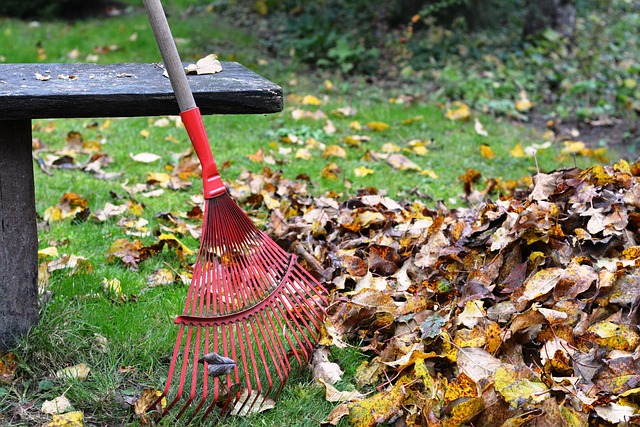
· 2 min read
Raymundo CH

Image illustrating the verb Scouting Out

Image uploaded to Pixabay by ArmyAmber

.

Definition

To carefully search for or look for something or someone, often in a discreet or thorough manner, sometimes implying the discovery of hidden or hard-to-find information or opportunities.

Examples

No.Example
1The detective spent hours scouting out the criminal's hideout.
2Before making an offer on a house, it's wise to scout out the neighborhood first.
3The explorers spent weeks scouting out the uncharted territory.
4The recruiters scout out potential employees at job fairs and colleges.
5The hunters spent days scouting out the best hunting spots.
6The real estate agent suggested scouting out the area during different seasons.
7The security team was tasked with scouting out the building for any vulnerabilities.
8The journalists often scout out sources and information for their stories.
9The hikers scouted out the trail before starting their journey.
10The scientists spent years scouting out new discoveries in their field.

Phrasal Verb - Cook Up

· 2 min read
Raymundo CH

Image illustrating the verb Cook Up

Image uploaded to Pixabay by congerdesign

.

Definition

To plan, organize, and prepare (an idea, a story, a scheme) in a secretive or deceitful manner. Sometimes, it can also refer to the act of falsifying or creating information.

Examples

No.Example
1The detective suspected that the suspects were trying to cook up an alibi.
2The politicians were accused of cooking up a scandal to discredit their opponents.
3The inventor has a reputation for cooking up innovative ideas.
4The journalist uncovered a plot to cook up a fake news story.
5The company was accused of cooking up a financial crisis to avoid paying taxes.
6The scientists had to cook up a new theory to explain the experimental results.
7The writer struggled to come up with a compelling story but eventually managed to cook one up.
8The police suspected that the crime scene had been altered to cook up a false lead.
9The conspirators were caught red-handed trying to cook up a plan to steal billions.
10The researcher cooked up a hypothesis based on incomplete data and later found it to be incorrect.

Phrasal Verb - Cutting Up

· 2 min read
Raymundo CH

Image illustrating the verb Cutting Up

Image uploaded to Pixabay by GrownDiamond

.

Definition

To cut up is a phrasal verb that means to dissect, analyze, or break down something, such as a problem, a relationship, or a concept, into smaller parts in order to understand its various components, their interactions, and their implications. It can also refer to the act of criticizing or condemning something harshly, often in a public or formal manner.

Examples

No.Example
1The professor decided to cut up the complex theory into smaller chapters for the students to understand.
2The journalist was known for cutting up politicians' speeches to point out their contradictions.
3The psychologist used the technique of cutting up the patient's memories to treat their psychological trauma.
4The critics cut up the director's new movie, calling it a waste of resources.
5The manager decided to cut up the company's budget to allocate funds to more essential projects.
6The scientist cut up the data to identify patterns and make predictions.
7The writer felt it was necessary to cut up the societal norms to reveal the harsh reality.
8The lawyer cut up the defendant's alibi to expose their lack of credibility.
9The teacher cut up the textbook to provide a more engaging learning experience for her students.
10The researchers cut up the research papers to examine the relationships between variables.