129 posts tagged with "business"

View All Tags

Phrasal Verb - Letting Go

· 2 min read

Raymundo CH

Image illustrating the verb Letting Go

Image uploaded to Pixabay by geralt

.

Definition

The phrasal verb 'let go' can have several meanings: 1. To release or allow someone or something to leave or go, often implying giving up control or responsibility. 2. To stop doing something, such as a job or a habit. 3. To forgive or pardon someone. 4. To allow a balloon or a kite to be carried away by the wind. 5. To abandon or neglect a project or responsibility. 6. In the context of sailing, to release the sails from the mast so that they billow in the wind.

Examples

No.Example
1My boss finally let me go after I finished my project.
2I decided it was time to let go of my anger towards him.
3The company had to let go of several employees due to budget cuts.
4She let go of the balloon and watched it float up into the sky.
5I'm sorry, I just can't let go of this mistake.
6The sailor let go of the sail and the wind filled it with air.
7He let go of the rope and the raft drifted away.
8The team let go of their fears and played with confidence in the final match.
9After years of neglect, the city finally let go of the abandoned building.
10I'll let go of the ropes when you're ready to jump.

Phrasal Verb - Linking Up

· 2 min read
Raymundo CH

Image illustrating the verb Linking Up

Image uploaded to Pixabay by Silberkugel66

.

Definition

To establish a connection or communication between two or more people, devices, or systems, often through social media or other digital means. This phrasal verb can also refer to physically connecting things, but the digital usage is more common.

Examples

No.Example
1I've linked up with some great business contacts on LinkedIn.
2Can you help me link up my new phone to the Wi-Fi?
3My friends and I plan to link up at the park for a picnic.
4The two companies have agreed to link up their databases for more efficient data sharing.
5After the conference, many attendees exchanged business cards and linked up on LinkedIn.
6The new app allows users to link up their social media accounts for easier sharing.
7To link up your computer to the projector, use this cable.
8I'll link up with you later to discuss the project details.
9The hikers linked up their campsites for the night, sharing food and stories.
10The team's success relied on their ability to link up and communicate effectively.

Phrasal Verb - locking in

· 2 min read
Raymundo CH

Image illustrating the verb locking in

Image uploaded to Pixabay by Kranich17

.

Definition

  1. To make a decision or commitment irreversibly, usually by signing a contract or taking some other formal action. 2. In financial markets, to buy a security at a fixed price in anticipation of future price increases, in order to protect against potential losses or to profit from a rising market.

Examples

No.Example
1They decided to lock in their rates before the interest rates went up.
2The company locked in a long-term contract with the supplier to secure stable prices for raw materials.
3Investors often lock in their profits by selling their stocks when they reach a certain price.
4After months of deliberation, the board finally locked in the new CEO.
5The airline passenger was able to lock in a lower fare for her flight by booking early.
6The real estate developer locked in a large land purchase to take advantage of a favorable market.
7The stockbroker advised his clients to lock in their gains before the market closed.
8The union negotiated a collective bargaining agreement that locked in wage increases for several years.
9The insurance company offered its customers the option to lock in their premiums for a fixed term.
10The investor locked in his losses by selling his stocks at a lower price than he had bought them.

Phrasal Verb - Looking ahead looksliness

· 2 min read
Raymundo CH

Image illustrating the verb Looking ahead looksliness

Image uploaded to Pixabay by SimBae

.

Definition

Looking ahead is a phrasal verb that means to plan or prepare for the future, to anticipate or consider what may happen next. It implies a proactive and forward-thinking attitude, and can be used in various contexts such as business, personal life, or travel.

Examples

No.Example
1The project manager asked the team to look ahead and identify potential risks and solutions.
2I'd recommend looking ahead to the weekend and making plans to relax and recharge.
3The company's CEO looked ahead to the next quarter and saw opportunities for growth.
4Looking ahead to the holiday season, I'm excited to spend time with family and friends.
5The hikers looked ahead and saw a beautiful view of the valley below.
6The stock market analysts looked ahead to the upcoming economic report and made predictions.
7Looking ahead to the new year, I'm determined to make positive changes in my life.
8The coach looked ahead to the next game and strategized with the team.
9Looking ahead to retirement, I want to travel and explore new places.
10The students looked ahead to their exams and studied diligently.

Phrasal Verb - Bowing Out

· 2 min read
Raymundo CH

Image illustrating the verb Bowing Out

Image uploaded to Pixabay by IdeaTivas-TLM

.

Definition

To withdraw from a competition, activity, position, or public life, often in a graceful, dignified, or voluntary manner, especially after a long or distinguished period of involvement, or at a significant juncture. It implies a conscious decision to step aside, rather than being forced out, and can be used in contexts ranging from sports and politics to business and personal engagements.

Examples

No.Example
1The veteran politician decided to bow out of public life after serving five terms.
2After winning the championship, the legendary coach announced his decision to bow out.
3She plans to bow out of the company at the end of the year to pursue personal interests.
4The band will bow out with a grand farewell tour next summer.
5It's always better to bow out gracefully when you feel it's your time.
6He might bow out of the project if the funding doesn't come through.
7The reigning champion chose to bow out on a high note, undefeated.
8Many experienced chefs bow out of the fast-paced restaurant scene to open smaller, more intimate eateries.
9The company decided to bow out of the competitive smartphone market.
10She promised to bow out of her volunteer duties once her replacement was fully trained.

Phrasal Verb - Bringing in

· 2 min read
Raymundo CH

Image illustrating the verb Bringing in

Image uploaded to Pixabay by bartekhdd

.

Definition

The phrasal verb "bring in" is highly versatile, possessing several distinct meanings depending on the context. Primarily, it refers to the act of generating or earning money, profit, or revenue, as in securing financial gain for an individual or an organization. Secondly, it is commonly used to describe the introduction or implementation of something new, such as a law, a system, a policy, or a custom, making it effective or operational. Thirdly, "bring in" can mean to involve or recruit someone (often an expert, consultant, or additional personnel) for a specific task, project, or situation where their skills or presence are required. In a legal context, it specifically refers to a jury or court delivering or presenting a verdict. Less frequently, it can denote the act of collecting or gathering something, like a harvest, or causing something to become fashionable, popular, or accepted.

Examples

No.Example
1The new product line is expected to bring in significant profits for the company next quarter.
2The government plans to bring in stricter environmental regulations next year.
3We need to bring in an external consultant to help us resolve this complex technical issue.
4The jury brought in a guilty verdict after days of deliberation.
5Farmers are working hard to bring in the harvest before the storm hits.
6The marketing team's innovative campaign managed to bring in thousands of new customers.
7To expand our operations, we'll need to bring in more capital from investors.
8Her unique style helped to bring in a fresh perspective to the fashion industry.
9The charity event brought in a substantial amount of donations for the local orphanage.
10The manager decided to bring in a new project lead to accelerate development.

Phrasal Verb - backing out

· 2 min read
Raymundo CH

Cartoon representing the phrasal verb backing out

Definition

The act or process of withdrawing from an agreement, commitment, promise, or arrangement that one had previously made or implied. It typically involves a change of mind, a sudden reluctance, or an inability to fulfill one's part, often resulting in inconvenience, disappointment, or negative consequences for the other parties involved. This phrasal verb can refer to anything from a casual social plan to a formal business contract, signifying a departure from an established understanding or obligation, and often carries a connotation of unreliability or abandonment of responsibility.

Examples

No.

Examples

1She was excited about the trip, but she's backing out at the last minute due to unforeseen circumstances.
2After weeks of negotiation, the buyer decided to back out of the property deal, leaving the seller frustrated.
3You can't just back out of your responsibilities without considering the impact on the team.
4He backed out of the volunteer project because he found a new job that required more of his time.
5Despite giving their word, the company backed out of the merger agreement, citing new financial concerns.
6Are you really considering backing out of our plans for this weekend after we've already made reservations?
7The band had to back out of the festival lineup due to a sudden illness affecting their lead singer.
8I felt really let down when they backed out of helping with the move, leaving us short-handed.
9Don't promise anything if you think you might back out later; it's better to be honest upfront.
10The government was criticized for backing out of its climate change commitments made during the previous administration.

Phrasal Verb - accounting for

· 2 min read
Raymundo CH

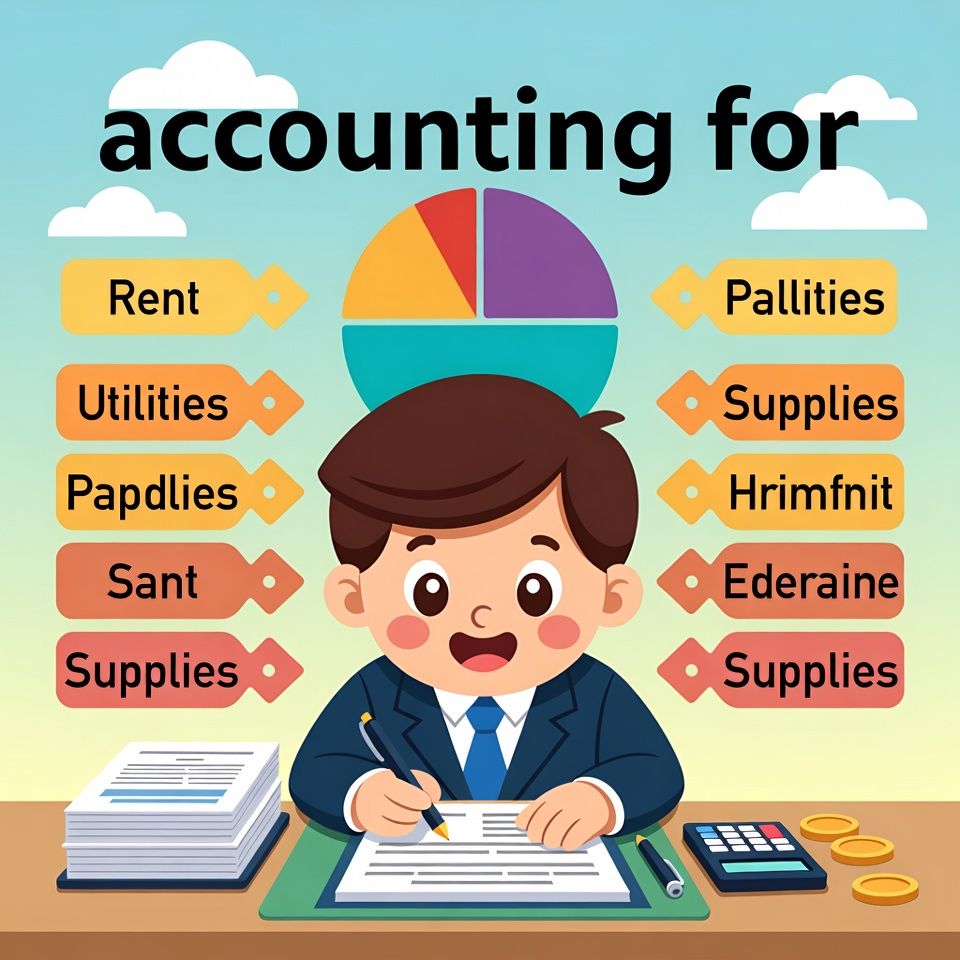
Cartoon representing the phrasal verb accounting for

Definition

The phrasal verb "account for" is multi-faceted, carrying distinct meanings depending on its context. Primarily, it means to provide a satisfactory explanation or justification for something, often an event, an action, a decision, or a phenomenon; this involves elucidating the reasons, causes, or circumstances behind it. Secondly, it is used to signify that something constitutes, makes up, or forms a particular proportion, share, or part of a larger whole, quantifying its contribution or representation. Thirdly, "account for" can mean to be responsible for managing, explaining the whereabouts, or detailing the use of money, assets, or property that has been entrusted to one's care. Lastly, it can refer to explaining what has become of someone or something that is missing, lost, or unaccounted for, ensuring all items or individuals are located or their fate is known.

Examples

1The manager asked the team to prepare a report accounting for the unexpected decrease in sales last quarter.
2Scientists are still accounting for the sudden changes in the polar ice caps, linking them to global warming.
3The financial department is responsible for accounting for every penny spent from the company's budget.
4Online transactions are now accounting for over 70% of our total retail sales.
5The suspect struggled to provide a credible alibi, accounting for his whereabouts on the night of the incident.
6We need to implement a new inventory system capable of accurately accounting for all incoming and outgoing stock.
7Cultural differences often account for variations in consumer behavior across international markets.
8During the audit, the accountant was tasked with accounting for a significant discrepancy in the company's records.
9His consistent dedication and hard work accounted for his rapid promotion within the firm.
10The project manager needs to account for the delays in the construction schedule to the stakeholders.

Phrasal Verb - acting on

· 2 min read
Raymundo CH

Cartoon representing the phrasal verb acting on

Definition

The phrasal verb 'act on' generally signifies two primary meanings, and 'acting on' is its gerund form, referring to the ongoing process or state of these actions. Firstly, it means to take action or respond based on information, advice, instructions, a decision, or a stimulus. This implies a conscious decision by an agent to implement or follow through with something that has been communicated or decided. For example, 'acting on advice' means putting that advice into practice. Secondly, 'act on' can mean to have an effect or influence upon something, often in a physical, chemical, or biological context, without necessarily involving conscious decision. In this sense, one substance, force, or principle 'acts on' another, causing a change, reaction, or particular outcome. The gerund 'acting on' thus encapsulates both the active implementation of directives and the inherent exertance of influence or effect.

Examples

1The manager emphasized the importance of acting on customer feedback to improve service quality.
2After a thorough investigation, the police began acting on the new intelligence to apprehend the suspect.
3Scientists are studying how certain enzymes are acting on cellular processes to understand disease mechanisms.
4Despite the risks, she found herself acting on her intuition, which ultimately led to a successful outcome.
5The financial firm specializes in acting on market trends and data to make informed investment decisions.
6It's vital for emergency services to be capable of acting on urgent warnings without delay.
7The new software patch is designed for acting on security threats in real-time.
8He's been hesitant about acting on the proposed changes to his business model, despite their potential benefits.
9Environmental regulations are often established with the goal of acting on industrial pollution to protect natural resources.
10The body's immune system is constantly acting on foreign invaders to maintain health.