6 posts tagged with "Personal Relationships"

View All Tags

Phrasal Verb - Coming Clean

· 2 min read

Raymundo CH

Image illustrating the verb Coming Clean

Image uploaded to Pixabay by NoName_13

.

Definition

To 'come clean' means to confess to a past wrongdoing, secret, or lie, revealing the truth about something one has been hiding, often after a period of guilt, fear, or concealment. It implies admitting fault, being honest, and disclosing information that was previously kept secret, typically with the intention of alleviating a burden, facing consequences, or resolving a situation. This phrasal verb suggests a voluntary act of transparency, often prompted by conscience, external pressure, or the inevitability of the truth coming out, and it often leads to a sense of relief for the confessor, though it may also bring about difficult repercussions.

Examples

No.Example
1After weeks of speculation, the celebrity finally came clean about his secret marriage.
2The detective encouraged the suspect to come clean and tell them everything he knew.
3She felt an immense sense of relief after coming clean to her parents about dropping out of college.
4It's better to come clean now than to let the lie fester and cause more damage later.
5The company was forced to come clean about the hazardous waste disposal after the scandal broke.
6He agonized for days, weighing the pros and cons of coming clean to his wife about his financial troubles.
7If you don't come clean about your involvement, the blame might fall on someone innocent.
8The politician eventually came clean about accepting illegal campaign contributions.
9Coming clean required a lot of courage, but it was the right thing to do.
10The therapist advised her client to come clean to her employer about the mistake she made.

Phrasal Verb - Eating Away At

· 2 min read
Raymundo CH

Image illustrating the verb Eating Away At

Image uploaded to Pixabay by lpegasu

.

Definition

To have a gradually but regularly weakening or destructive effect on something or someone, often in a way that is barely noticeable at first but becomes increasingly significant over time.

Examples

No.Example
1The effects of pollution are slowly eating away at the city's ecosystem.
2Her tiredness was eating away at her energy levels.
3The hole in the roof was eating away at the structural integrity of the house.
4The noise is eating away at my concentration.
5His obsession with wealth was eating away at his relationship with his family.
6The constant criticism was eating away at her self-confidence.
7The rainy weather was eating away at the new roads before they were even completed.
8His concern for the environment was eating away at his desire to continue driving a gas-guzzling car.
9The worry about running out of water was eating away at the community's morale.
10His anger was eating away at this opportunity to connect with his brother.

Phrasal Verb - Getting back

· 3 min read
Raymundo CH

Image illustrating the verb Getting back

Image uploaded to Pixabay by nawonil

.

Definition

The phrasal verb "get back" is highly versatile, carrying several distinct meanings depending on context. It most commonly refers to:

  1. Returning to a place or person: To go back to a previous location or to rejoin someone. (e.g., "What time did you get back home?")
  2. Receiving something again: To recover something that was lost, stolen, or previously given away. This can apply to physical items, money, or even abstract concepts like health or a feeling. (e.g., "I hope I get my deposit back.")
  3. Reverting to a previous state, topic, or activity: To resume a task, topic of discussion, or return to a normal or original condition after an interruption, change, or illness. (e.g., "Let's get back to work.")
  4. Replying or responding to someone: To communicate a response or information to someone who has contacted you, often after a delay. This is typically used with the preposition 'to'. (e.g., "I'll get back to you by email.")
  5. Taking revenge or retaliating: (Informal) To do something harmful or unpleasant to someone because they have done something similar to you, often followed by 'at' or 'on'. (e.g., "She swore she'd get back at him.")
  6. Moving or stepping backward: (Less common literal use) To physically move in a reverse direction. (e.g., "Get back from the edge!")

Examples

No.Example
1What time did you get back from your vacation last night?
2I'll get back to you with the final details by the end of the day.
3He was determined to get his stolen bicycle back, no matter what it took.
4Alright, let's get back to the main topic of our meeting before we run out of time.
5She promised to get back at him for embarrassing her in front of everyone.
6We need to get back home before the heavy rain starts.
7It took her several months to get back to normal after the traumatic accident.
8Did you ever manage to get your money back from that faulty product?
9Could you please get this library book back for me by Friday?
10I tried calling him twice, but he still hasn't gotten back to me.
11The manager told the crowd to get back from the barricade.

Phrasal Verb - Hushing Up

· 2 min read
Raymundo CH

Image illustrating the verb Hushing Up

Image uploaded to Pixabay by Fotospks

.

Definition

To keep secret or suppress information that could potentially cause trouble or controversy. This can be done through deliberate concealment or by discouraging others from speaking about it.

Examples

No.Example
1The company hushed up the scandal to avoid negative publicity.
2They tried to hush up the news of the CEO's resignation until they could find a suitable replacement.
3The witnesses were threatened to hush up their testimony.
4The politician's team worked to hush up damaging information about their candidate.
5The family hushed up the details of the accident to protect their dignity.
6The investigative journalist was warned to hush up his findings or face legal action.
7The whistleblower was hushed up by his colleagues for fear of retaliation.
8The government hushed up the report on the environmental impact of the new project.
9The school hushed up the incident to avoid damaging the reputation of the students involved.
10The victim's family was urged to hush up the matter to prevent further distress.

Phrasal Verb - Blowing Over

· 2 min read
Raymundo CH

Image illustrating the verb Blowing Over

Image uploaded to Pixabay by anaterate

.

Definition

The phrasal verb 'blow over' refers to a situation, argument, scandal, or emotional outburst that subsides, passes, or ceases to be important or problematic without causing severe or lasting damage or consequences. It implies that the intensity of the issue diminishes over time, often because people lose interest, forget about it, or the immediate cause of the trouble resolves itself. Essentially, it means that a storm or a period of difficulty eventually clears, leaving little or no permanent impact. This often suggests a temporary nature to the conflict or problem, with the expectation that, given time, it will naturally fade away and be forgotten.

Examples

No.Example
1Don't worry about this little disagreement; it's just a misunderstanding, and it will surely blow over by morning.
2The media frenzy surrounding the celebrity's minor gaffe is expected to blow over within a few days.
3At first, their argument seemed very serious, but I told them to give it some time, and it eventually blew over.
4She hoped the criticism about her new policy would simply blow over once people saw its benefits.
5History shows that many political scandals blow over, especially if no serious illegal activity is proven.
6He was very upset about the lost game, but his anger usually blows over quite quickly.
7Just ignore their snide remarks; petty jealousies often blow over if you don't feed them.
8The company is confident that the recent negative press will blow over once their new product launches.
9We decided not to escalate the minor dispute, hoping it would just blow over on its own.
10Although the initial public outcry was significant, the controversy slowly began to blow over as new issues emerged.

Phrasal Verb - backing down

· 3 min read
Raymundo CH

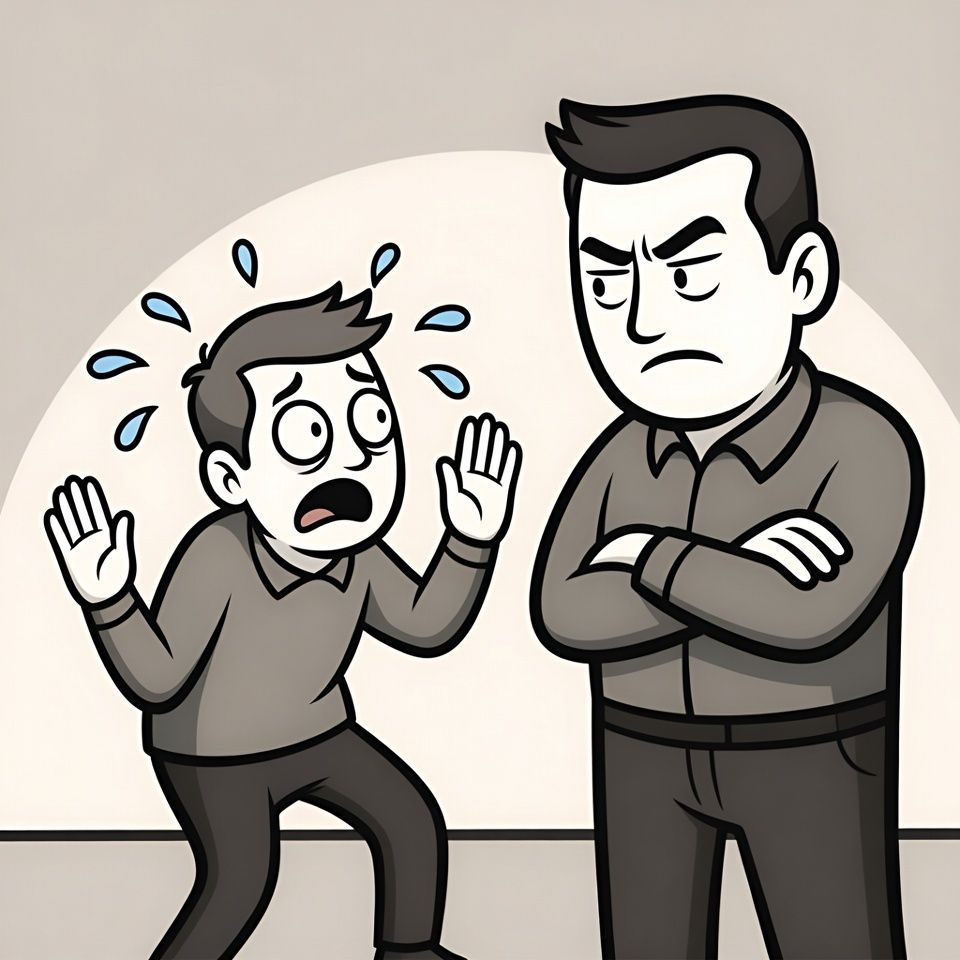
Cartoon representing the phrasal verb backing down

Definition

To 'back down' is a phrasal verb that describes the act of withdrawing from a position, claim, demand, or confrontation, typically due to pressure, fear, or a realization that one's stance is untenable, unsustainable, or likely to lead to undesirable consequences. It implies a concession, a retreat, or a surrender in an argument, a negotiation, a dispute, or a challenge. When an individual or entity 'backs down,' they abandon their previously held strong position, often yielding to the will or demands of an opposing party, or deciding not to pursue a particular course of action they had initially intended. This withdrawal can be voluntary, based on a change of heart, a reassessment of strategy, or a desire for compromise, or it can be involuntary, forced by external circumstances, superior pressure, or a lack of resources to sustain the original position. It frequently carries a connotation of weakness, capitulation, or a loss of face, especially if the person or group was widely expected to stand firm or uphold their original commitment.

Examples

No.

Examples

1The government refused to back down on its controversial new policy despite widespread public protests.
2After facing intense scrutiny, the CEO had no choice but to back down from the unpopular decision.
3She's known for her resolve; she rarely backs down once she's made a commitment.
4The union isn't showing any signs of backing down in their fight for better wages.
5If you don't back down, this petty argument is going to escalate into a serious conflict.
6Despite immense pressure from shareholders, the board decided not to back down on their long-term strategy.
7The child was stubborn and refused to back down from his demand for another cookie.
8It was clear that neither side was willing to back down during the tense international negotiations.
9After hours of debate, the council member reluctantly backed down on the proposed budget cut to avoid further division.
10Are you suggesting I should back down just because the task is proving more difficult than anticipated?