Phrasal Verb - backing out

· 2 min read
Raymundo CH

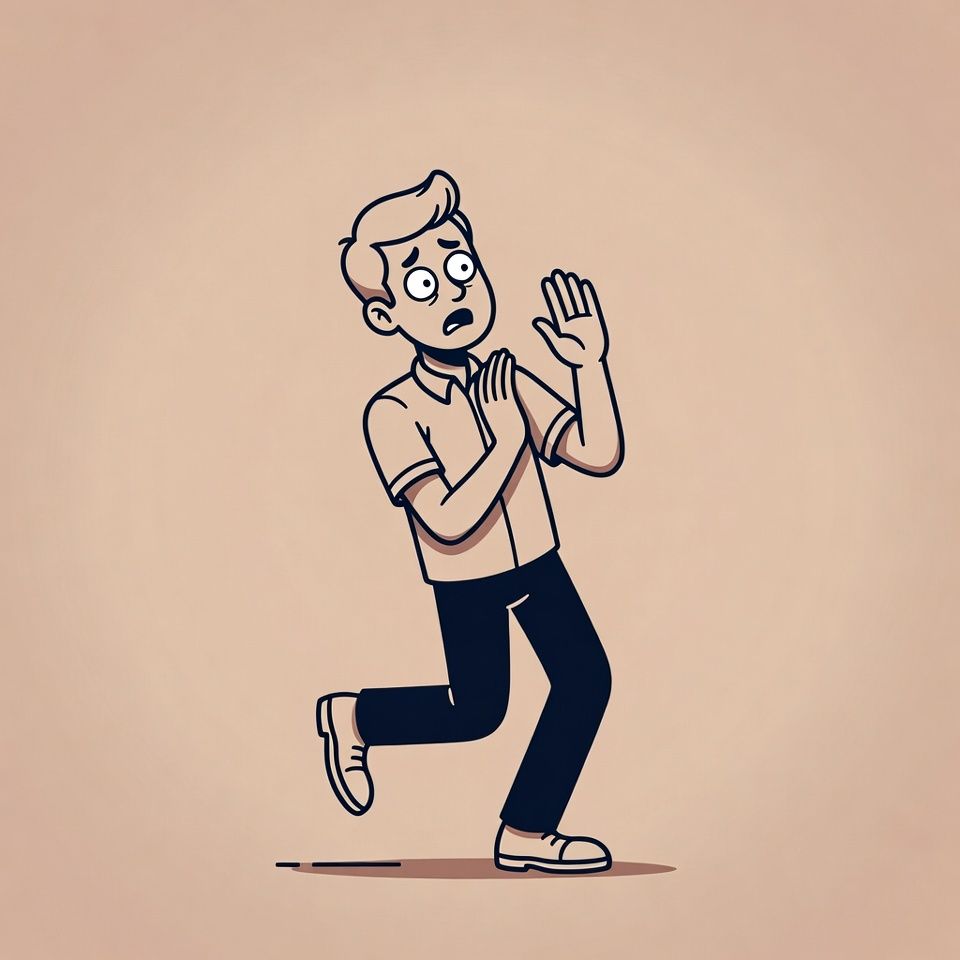
Cartoon representing the phrasal verb backing out

Definition

The act or process of withdrawing from an agreement, commitment, promise, or arrangement that one had previously made or implied. It typically involves a change of mind, a sudden reluctance, or an inability to fulfill one's part, often resulting in inconvenience, disappointment, or negative consequences for the other parties involved. This phrasal verb can refer to anything from a casual social plan to a formal business contract, signifying a departure from an established understanding or obligation, and often carries a connotation of unreliability or abandonment of responsibility.

Examples

No.

Examples

1She was excited about the trip, but she's backing out at the last minute due to unforeseen circumstances.
2After weeks of negotiation, the buyer decided to back out of the property deal, leaving the seller frustrated.
3You can't just back out of your responsibilities without considering the impact on the team.
4He backed out of the volunteer project because he found a new job that required more of his time.
5Despite giving their word, the company backed out of the merger agreement, citing new financial concerns.
6Are you really considering backing out of our plans for this weekend after we've already made reservations?
7The band had to back out of the festival lineup due to a sudden illness affecting their lead singer.
8I felt really let down when they backed out of helping with the move, leaving us short-handed.
9Don't promise anything if you think you might back out later; it's better to be honest upfront.
10The government was criticized for backing out of its climate change commitments made during the previous administration.

Phrasal Verb - accounting for

· 2 min read
Raymundo CH

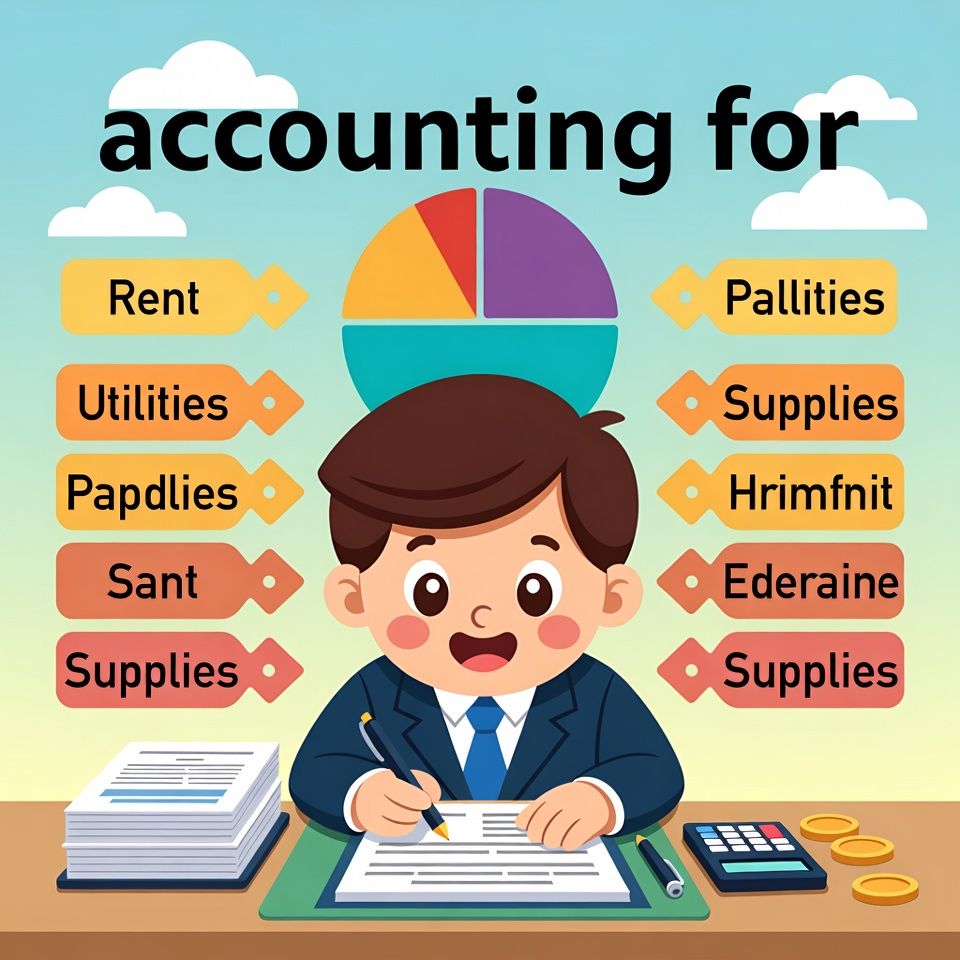
Cartoon representing the phrasal verb accounting for

Definition

The phrasal verb "account for" is multi-faceted, carrying distinct meanings depending on its context. Primarily, it means to provide a satisfactory explanation or justification for something, often an event, an action, a decision, or a phenomenon; this involves elucidating the reasons, causes, or circumstances behind it. Secondly, it is used to signify that something constitutes, makes up, or forms a particular proportion, share, or part of a larger whole, quantifying its contribution or representation. Thirdly, "account for" can mean to be responsible for managing, explaining the whereabouts, or detailing the use of money, assets, or property that has been entrusted to one's care. Lastly, it can refer to explaining what has become of someone or something that is missing, lost, or unaccounted for, ensuring all items or individuals are located or their fate is known.

Examples

1The manager asked the team to prepare a report accounting for the unexpected decrease in sales last quarter.
2Scientists are still accounting for the sudden changes in the polar ice caps, linking them to global warming.
3The financial department is responsible for accounting for every penny spent from the company's budget.
4Online transactions are now accounting for over 70% of our total retail sales.
5The suspect struggled to provide a credible alibi, accounting for his whereabouts on the night of the incident.
6We need to implement a new inventory system capable of accurately accounting for all incoming and outgoing stock.
7Cultural differences often account for variations in consumer behavior across international markets.
8During the audit, the accountant was tasked with accounting for a significant discrepancy in the company's records.
9His consistent dedication and hard work accounted for his rapid promotion within the firm.
10The project manager needs to account for the delays in the construction schedule to the stakeholders.

Phrasal Verb - acting on

· 2 min read
Raymundo CH

Cartoon representing the phrasal verb acting on

Definition

The phrasal verb 'act on' generally signifies two primary meanings, and 'acting on' is its gerund form, referring to the ongoing process or state of these actions. Firstly, it means to take action or respond based on information, advice, instructions, a decision, or a stimulus. This implies a conscious decision by an agent to implement or follow through with something that has been communicated or decided. For example, 'acting on advice' means putting that advice into practice. Secondly, 'act on' can mean to have an effect or influence upon something, often in a physical, chemical, or biological context, without necessarily involving conscious decision. In this sense, one substance, force, or principle 'acts on' another, causing a change, reaction, or particular outcome. The gerund 'acting on' thus encapsulates both the active implementation of directives and the inherent exertance of influence or effect.

Examples

1The manager emphasized the importance of acting on customer feedback to improve service quality.
2After a thorough investigation, the police began acting on the new intelligence to apprehend the suspect.
3Scientists are studying how certain enzymes are acting on cellular processes to understand disease mechanisms.
4Despite the risks, she found herself acting on her intuition, which ultimately led to a successful outcome.
5The financial firm specializes in acting on market trends and data to make informed investment decisions.
6It's vital for emergency services to be capable of acting on urgent warnings without delay.
7The new software patch is designed for acting on security threats in real-time.
8He's been hesitant about acting on the proposed changes to his business model, despite their potential benefits.
9Environmental regulations are often established with the goal of acting on industrial pollution to protect natural resources.
10The body's immune system is constantly acting on foreign invaders to maintain health.

Phrasal Verb - acting out

· 2 min read
Raymundo CH

Cartoon representing the phrasal verb acting out

Definition

The phrasal verb "acting out" primarily refers to the expression of difficult emotions, psychological conflicts, or unconscious impulses through observable behavior rather than through verbal articulation or conscious processing. This often manifests as disruptive, aggressive, self-destructive, or attention-seeking actions, especially when an individual (particularly a child or adolescent) lacks the verbal skills, emotional maturity, or conscious awareness to communicate their inner turmoil directly. For example, a child might have tantrums or become defiant when feeling neglected, rather than stating they feel sad or lonely. In a secondary, more literal sense, "acting out" can also mean to perform or demonstrate something dramatically, theatrically, or in a practical simulation, such as a scene from a play, a story, a specific scenario, or a role-play, often to illustrate a point, practice a skill, or entertain.

Examples

1The therapist suggested that the child was acting out his anxiety about the new school through his disruptive behavior.
2Teenagers often act out when they feel misunderstood or like their opinions aren't valued.
3During the workshop, participants were asked to act out a typical customer service interaction.
4She tends to act out her frustrations by withdrawing and becoming irritable, rather than talking about them.
5The director wanted the improvisational troupe to act out various fairy tales in a modern setting.
6Without proper attention, some students may start acting out to get noticed by the teacher.
7He was clearly acting out against his parents' strict rules by staying out late every night.
8Can you act out the scene where the hero finally confronts the villain?
9When individuals experience severe trauma, they may act out the unresolved emotions in later life through compulsive behaviors.
10The kindergarten teacher frequently uses puppets to help the children act out different social situations and learn empathy.

Phrasal Verb - acting up

· 2 min read
Raymundo CH

Cartoon representing the phrasal verb acting up

Definition

Acting up is a versatile phrasal verb that primarily describes behavior or function that deviates negatively from the expected norm. In one common sense, it refers to misbehaving or behaving badly, particularly by children, pets, or individuals who are being unruly, disobedient, or causing trouble and disruption. This usage implies a deviation from good conduct or decorum. Secondly, it is frequently used to describe a malfunction, faulty operation, or improper functioning of a machine, device, or system. This could range from a car engine making unusual noises, a computer freezing unexpectedly, or an appliance not working as it should, indicating a technical issue that requires attention. Thirdly, it can be employed to describe the worsening or recurrence of a physical condition, illness, or pain, such as an old injury flaring up, an allergy manifesting symptoms, or a chronic ailment becoming more troublesome or painful. Across all contexts, 'acting up' generally conveys that something is not performing or behaving as it normally should, often leading to annoyance, inconvenience, or concern.

Examples

&#35

Examples

1The kids started acting up as soon as their parents left the room.
2My old car engine has been acting up, making a strange knocking sound.
3After a long day of hiking, my knee injury from college started acting up again.
4The computer system has been acting up all morning, causing delays in our work.
5If the dog keeps acting up like this, we'll have to consider more training.
6Her allergies always start acting up during the spring season.
7The printer in the office has been acting up, constantly jamming paper.
8Despite several warnings, the students continued acting up in the back row.
9I couldn't finish the report because my internet connection was acting up.
10My back often starts acting up after a strenuous session at the gym.

Phrasal Verb - adding up to

· 3 min read
Raymundo CH

![Cartoon representing the phrasal verb adding up to](/img/adding-up to.jpg)

Definition

The phrasal verb "add up to" encompasses several meanings, primarily revolving around the concepts of totality, outcome, and logical coherence. In its most literal sense, it refers to the act of calculating or resulting in a specific numerical sum when individual parts, quantities, or figures are combined; for instance, several expenses individually will, when totaled, "add up to" a final amount. Beyond simple arithmetic, it signifies that a series of actions, events, facts, or details collectively lead to, constitute, or signify a particular outcome, conclusion, or meaning. This implies that various components, when considered in conjunction, culminate in a specific result or interpretation. For example, a succession of minor issues might "add up to" a major problem. Furthermore, and often used in the negative form ("doesn't add up"), it means to make logical sense, be consistent, or be credible. If a story, explanation, or set of facts "doesn't add up," it implies there are inconsistencies, contradictions, or missing pieces of information that prevent it from being believable, coherent, or rationally understandable.

Examples

No.

Examples

1All the small purchases added up to a surprisingly large bill at the end of the month.
2The manager reviewed the project costs to see if they added up to the initial budget estimate.
3The clues in the mystery simply didn't add up, leading the detective to suspect foul play.
4What do all these economic indicators ultimately add up to for the future of the market?
5If you combine all the donations, it should add up to enough money to fund the entire charity event.
6Her excuses for consistently being late never add up, which makes us question her commitment.
7The cumulative effect of these minor policy changes can add up to a significant shift in corporate culture.
8We need to check the inventory; the number of items sold doesn't add up to what's remaining on the shelves.
9His conflicting statements about his whereabouts made it clear that his alibi didn't add up to the truth.
10Every small effort, when compounded over time, can add up to extraordinary achievements.

Phrasal Verb - asking around

· 2 min read
Raymundo CH

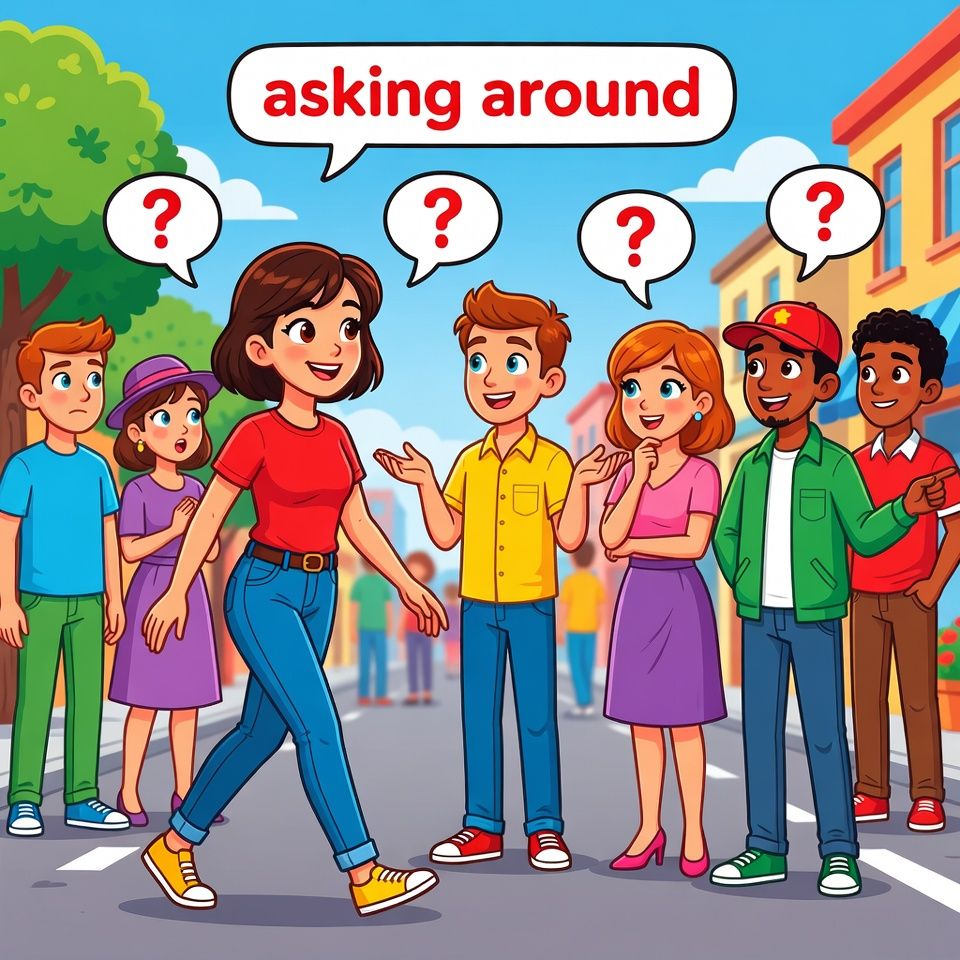
Cartoon representing the phrasal verb asking around

Definition

Asking around is the act of making inquiries or seeking information from multiple people, sources, or locations, rather than just one specific person or place. It implies a broad, often informal, and somewhat persistent effort to gather details, get opinions, find recommendations, locate a person or item, or understand a situation by consulting various individuals who might possess relevant knowledge or connections. This phrasal verb is typically used when the initial source of information is unknown or when a more comprehensive perspective is desired, leveraging a network or general public inquiry to piece together the necessary data. It's a common strategy for problem-solving, gathering advice, or finding something specific when direct information is not immediately available.

Examples

No.

Examples

1I've been asking around to see if anyone knows a reliable electrician in the area.
2She spent the entire morning asking around the office about the new project manager's reputation.
3If you're looking for a good restaurant, try asking around the hotel lobby; they usually have local insights.
4The police have been asking around the neighborhood, hoping someone witnessed the incident.
5Before making a big purchase, it's always smart to start asking around for reviews and recommendations.
6He was asking around for directions to the nearest bus stop, clearly lost.
7We need to begin asking around among our contacts to find a suitable candidate for the vacant position.
8My friend suggested asking around the local community center for volunteer opportunities.
9After asking around for days, I finally found someone who knew where to get that rare book.
10They are asking around at various agencies, trying to locate their missing pet.

Phrasal Verb - asking out

· 2 min read
Raymundo CH

Cartoon representing the phrasal verb asking out

Definition

To invite someone, typically a person with whom one has a romantic interest, to accompany them on a date or to a social event with the implicit or explicit intention of exploring or developing a romantic relationship. This action often signifies a transition from a platonic acquaintance or friendship to a potential romantic courtship. It involves a direct proposal for a shared activity outside of casual or group interactions, such as dinner, a movie, coffee, a concert, or any other activity designed for two people to spend focused, quality time together to get to know each other better in a romantic context. The act of asking someone out can be accompanied by feelings of nervousness, excitement, or anticipation, as it carries the risk of rejection but also the potential for a new romantic connection.

Examples

No.

Examples

1He's been working up the courage to ask her out for weeks.
2Are you ever going to ask him out, or just keep admiring him from afar?
3She was pleasantly surprised when he finally asked her out to dinner.
4My friends keep encouraging me to ask out my coworker, but I'm hesitant.
5If you don't ask her out soon, someone else definitely will.
6They met at a party, and he asked her out the very next day.
7I got asked out by a really charming person yesterday!
8It took a lot of bravery for him to ask out his crush.
9Don't be afraid to ask someone out; the worst they can say is no.
10She had always wanted to ask him out, but the timing never felt right.

Phrasal Verb - backing down

· 3 min read
Raymundo CH

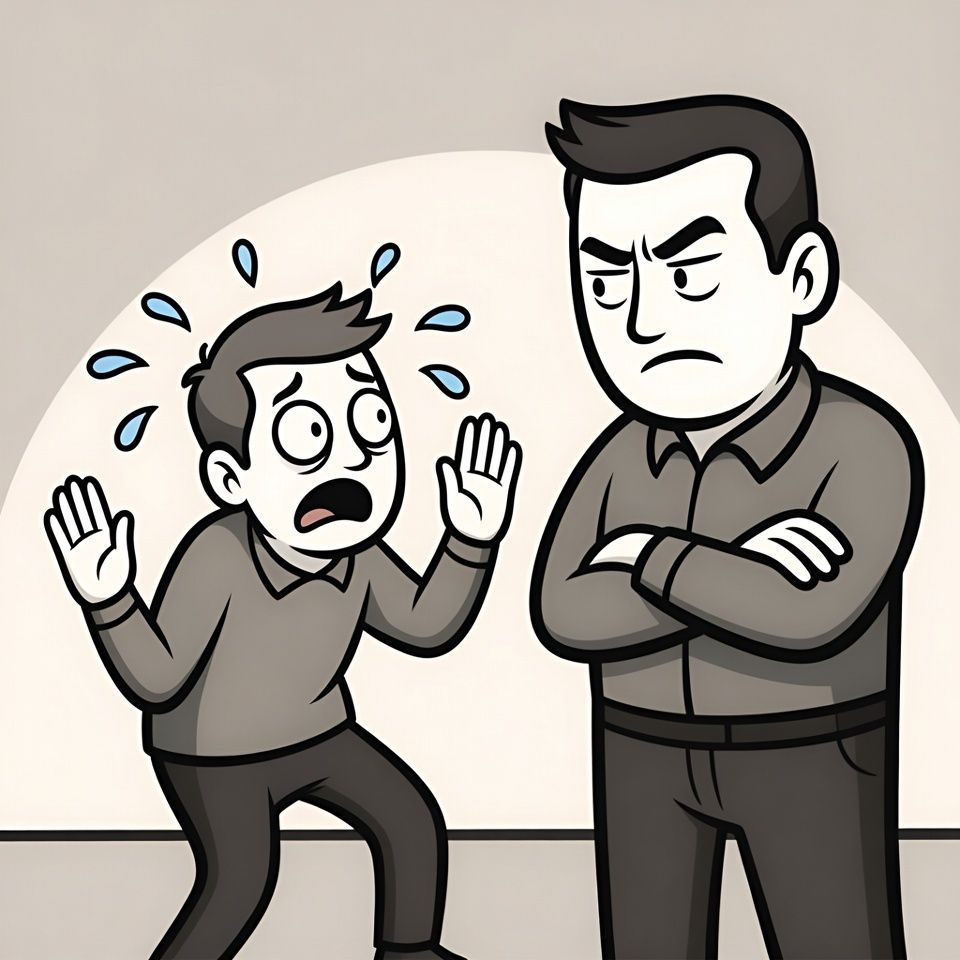
Cartoon representing the phrasal verb backing down

Definition

To 'back down' is a phrasal verb that describes the act of withdrawing from a position, claim, demand, or confrontation, typically due to pressure, fear, or a realization that one's stance is untenable, unsustainable, or likely to lead to undesirable consequences. It implies a concession, a retreat, or a surrender in an argument, a negotiation, a dispute, or a challenge. When an individual or entity 'backs down,' they abandon their previously held strong position, often yielding to the will or demands of an opposing party, or deciding not to pursue a particular course of action they had initially intended. This withdrawal can be voluntary, based on a change of heart, a reassessment of strategy, or a desire for compromise, or it can be involuntary, forced by external circumstances, superior pressure, or a lack of resources to sustain the original position. It frequently carries a connotation of weakness, capitulation, or a loss of face, especially if the person or group was widely expected to stand firm or uphold their original commitment.

Examples

No.

Examples

1The government refused to back down on its controversial new policy despite widespread public protests.
2After facing intense scrutiny, the CEO had no choice but to back down from the unpopular decision.
3She's known for her resolve; she rarely backs down once she's made a commitment.
4The union isn't showing any signs of backing down in their fight for better wages.
5If you don't back down, this petty argument is going to escalate into a serious conflict.
6Despite immense pressure from shareholders, the board decided not to back down on their long-term strategy.
7The child was stubborn and refused to back down from his demand for another cookie.
8It was clear that neither side was willing to back down during the tense international negotiations.
9After hours of debate, the council member reluctantly backed down on the proposed budget cut to avoid further division.
10Are you suggesting I should back down just because the task is proving more difficult than anticipated?